
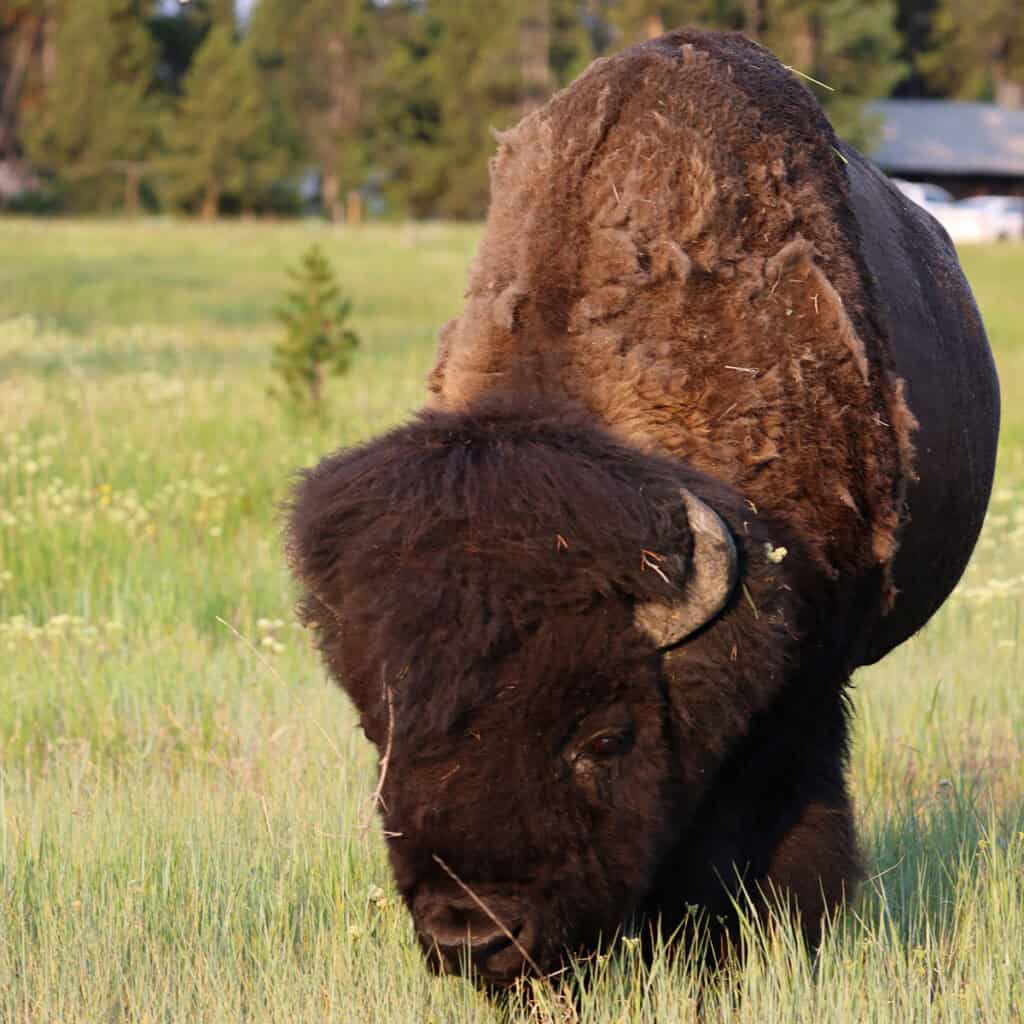
There is nothing quite like rounding a bend in the road and finding yourself face to face with a two thousand pound animal that has been roaming this continent since the last Ice Age. In my years as a park ranger, bison sightings always brought out the same reaction in visitors: a kind of stunned quiet, followed by a lot of very excited whispering. These ten destinations, from flagship national parks to a working state park and a couple of lesser known refuges, give you the best odds of seeing wild bison for yourself, and understanding just how remarkable their comeback really is.
Bison vs. Buffalo: What is the Difference?
You will hear both names used, and I have used both myself plenty of times, but only one is technically correct. The animal grazing in front of you is a bison, Bison bison, a species native to North America. True buffalo, the water buffalo and Cape buffalo, live in Asia and Africa and are only distant relatives. The nickname "buffalo" stuck with early American settlers and never really let go, which is why we still have Buffalo, New York, buffalo nickels, and buffalo wings named after an animal that is not, biologically speaking, a buffalo at all. Call it whichever you like around the campfire. Just know which one you are looking at.
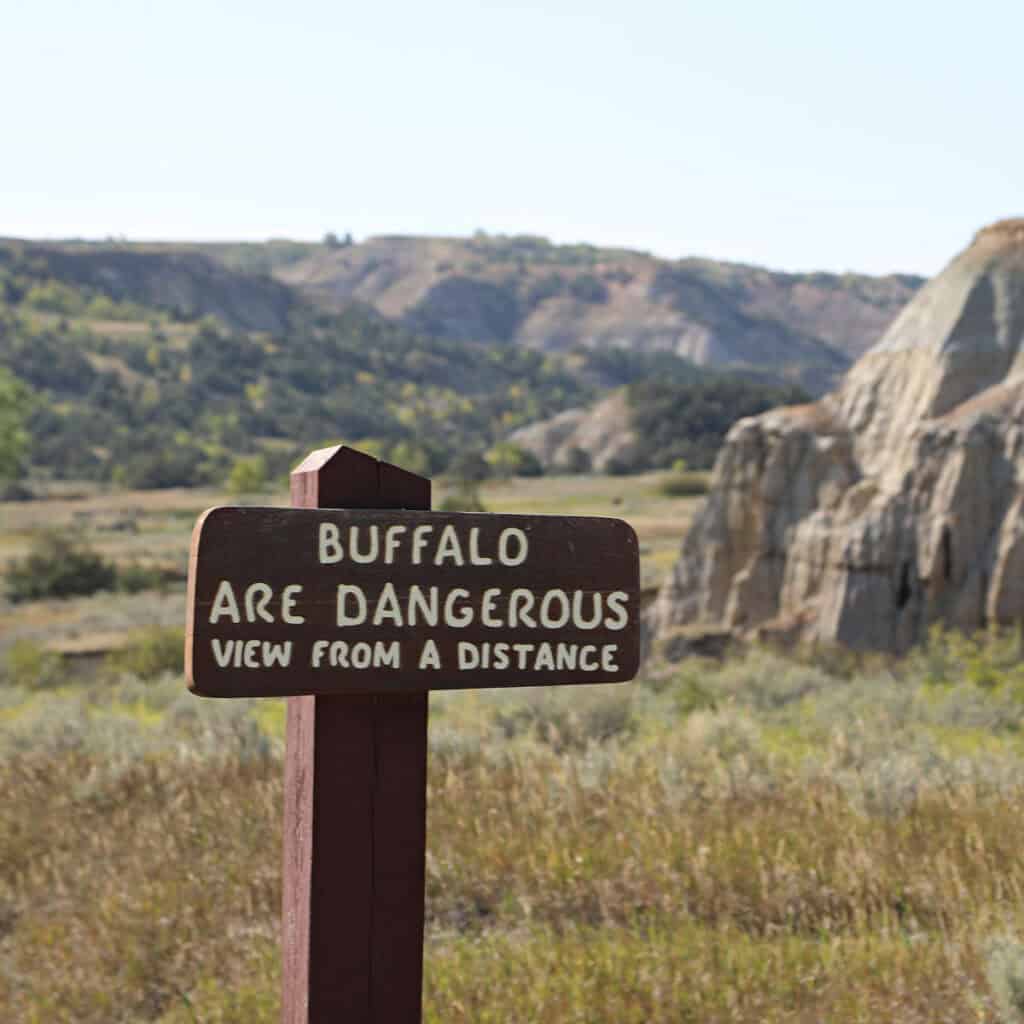
Bison Safety Reminder
Bison look slow and placid right up until the moment they are not. They can run up to three times faster than a human and have injured more visitors in national parks than any other animal, bears included. The National Park Service's standard guidance, posted at Yellowstone, Grand Teton, and every other NPS site with bison, is to stay at least 25 yards away, roughly 75 feet or about two school bus lengths, and to view them from inside a vehicle whenever they are near a road. A few of the state parks and private refuges on this list post their own local distance requirements on site, so always follow the signage where you are visiting. Never approach a bison for a photo, and never assume a calm bison will stay that way. Respect the distance and you will get a far better story to tell.
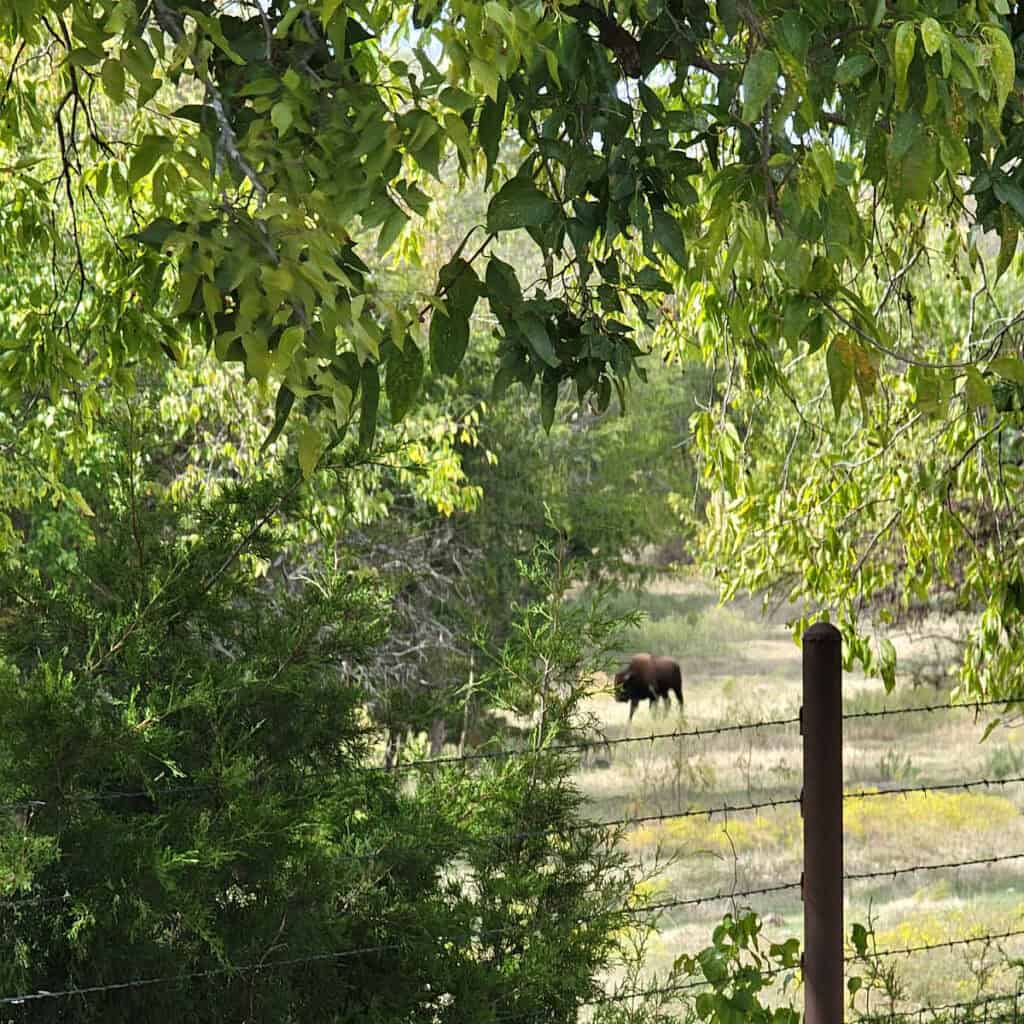
10. Chickasaw National Recreation Area: A Hidden Bison Spot in Oklahoma
Herd: Chickasaw Herd | Best Time: Afternoon, Year-Round
This one is easy to miss, since most visitors come to Chickasaw for the springs, creeks, and swimming holes rather than wildlife. Few people realize this was once its own national park. Established as Platt National Park in 1906, it was the seventh national park in the country and the smallest, until it was combined with the Arbuckle Recreation Area in 1976 and redesignated Chickasaw National Recreation Area, the name it carries today. A portion of the park's upland prairie is set aside as a dedicated bison pasture, home to a small herd descended from six bison brought over from the Wichita Mountains Wildlife Refuge back in 1920. It is not a sprawling, wide-open range like some of the parks further up this list, but the payoff is a reliably good chance of a sighting from the Bison viewpoint on Highway 177, most often in the afternoon, without needing to plan your whole trip around it.
9. Tallgrass Prairie National Preserve: Bison on One of the Last Wild Prairies
Herd: Flint Hills Herd | Best Time: Spring through Fall
Less than four percent of North America's original tallgrass prairie still exists, and this preserve protects one of the largest remaining pieces of it. A growing herd roams the Windmill Pasture and surrounding grasslands, working the land the way bison have for thousands of years, grazing in patterns that keep the prairie healthy and diverse. Walking the Southwind Nature Trail with six-foot grass swaying around you and a dark line of bison grazing in the distance is a completely different kind of bison encounter than the mountain valleys further west, and just as worth the trip.
8. Maxwell Wildlife Refuge: Guided Tram Tours Into the Prairie
Herd: Maxwell Herd | Best Time: Year-Round, Tram Tours Tuesday and Saturday
About fifty minutes northwest of Wichita, this 2,560-acre refuge protects another rare stretch of native tallgrass prairie and a free-roaming herd of bison and elk. Maxwell is a wonderfully low-key operation, a nonprofit refuge running guided tram tours right out onto the prairie where the herd lives, with photography tours and seasonal events like the fall elk rut added into the mix. It is an easy add-on for anyone road tripping through Kansas and a great option for families who want a guaranteed, guided bison encounter without the crowds of the bigger parks.
Check for Rates and Availability
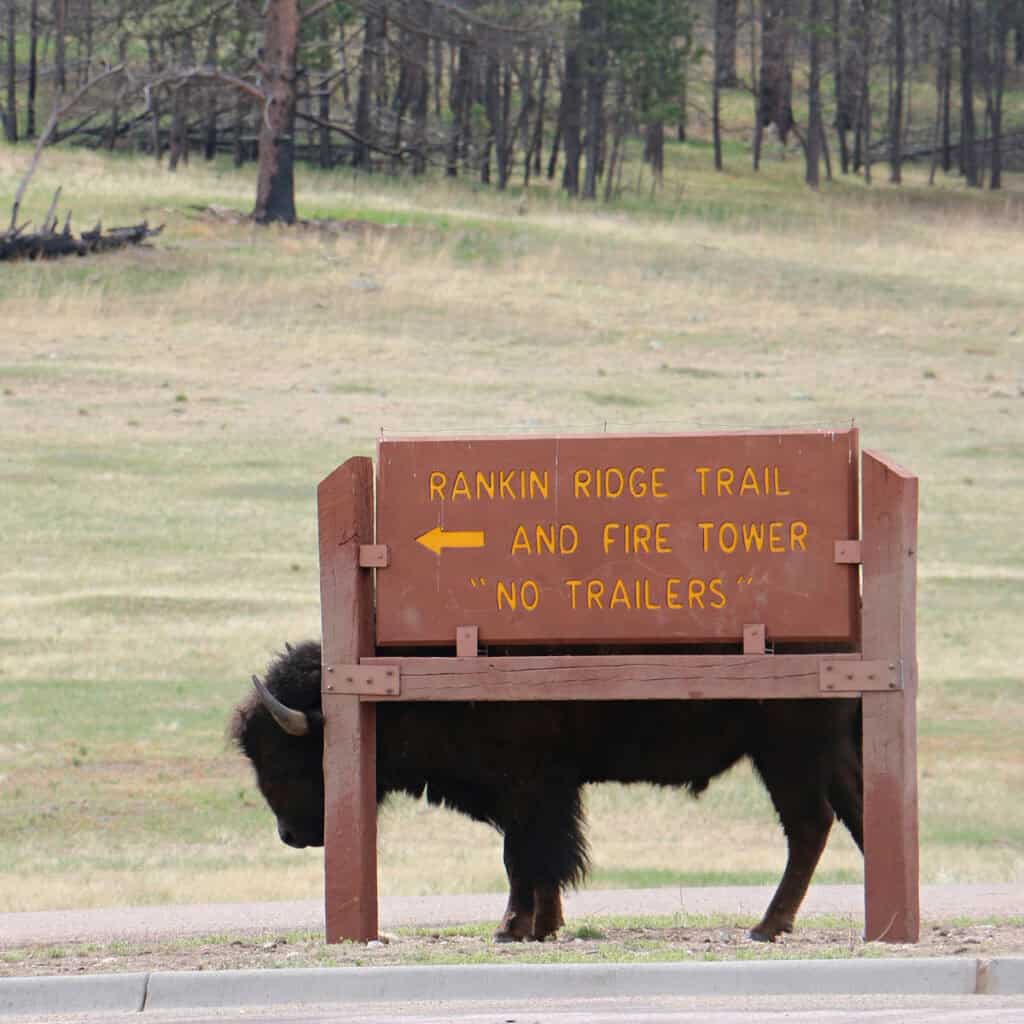
7. Wind Cave National Park: One of Only Two Genetically Pure Herds Left
Herd: Wind Cave Herd | Best Time: Spring through Fall
Wind Cave holds one of only two genetically pure bison herds remaining in any national park, the other being Yellowstone's, which makes this quiet Black Hills park far more significant than its modest size suggests. Look for bison near the Rankin Ridge area, along recently burned prairie, and around the park's prairie dog towns, which bison are drawn to for the shorter, tender grass. The park manages the herd with a hands-off approach designed to let natural selection do the work, keeping this population as wild and genetically valuable as possible for future conservation efforts elsewhere.
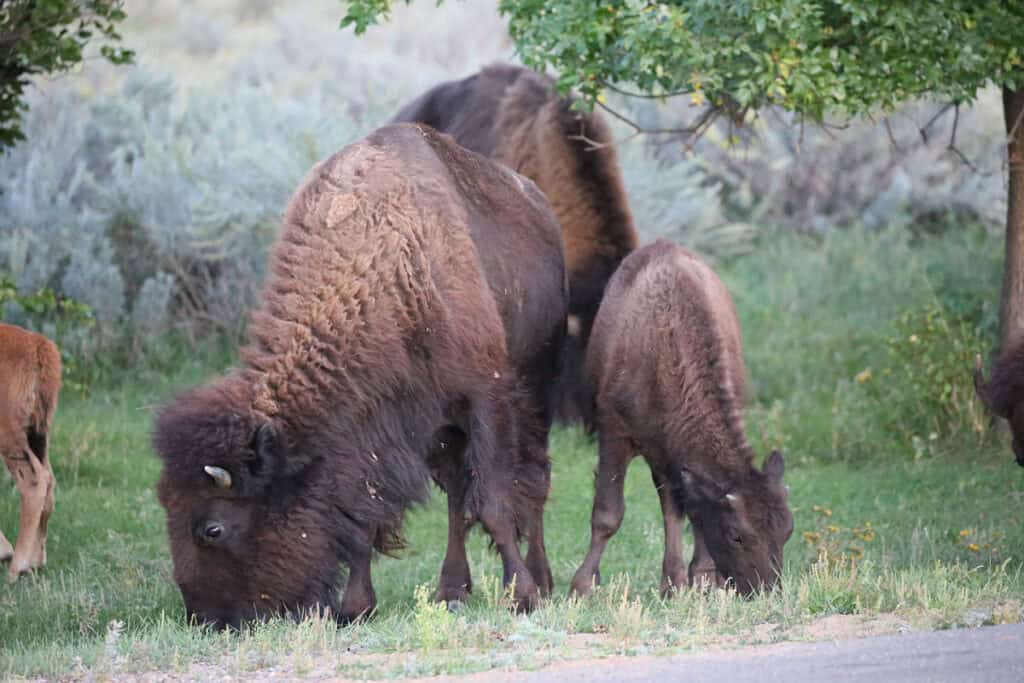
6. Theodore Roosevelt National Park: Bison in the Badlands Where TR Ranched
Herd: North Unit and South Unit Herds | Best Time: Spring and Fall
Named for the president most responsible for saving this species from extinction, Theodore Roosevelt National Park manages two separate bison herds across its North and South Units. The South Unit's 36-mile Scenic Loop Drive practically guarantees a sighting, especially in the cooler hours of early morning or evening, and during the fall rut when bulls put on an impressive show competing for mates. The rugged, colorful badlands here look much the same as they did when Roosevelt ranched this land in the 1880s, which makes every bison sighting feel like a small trip back in time.
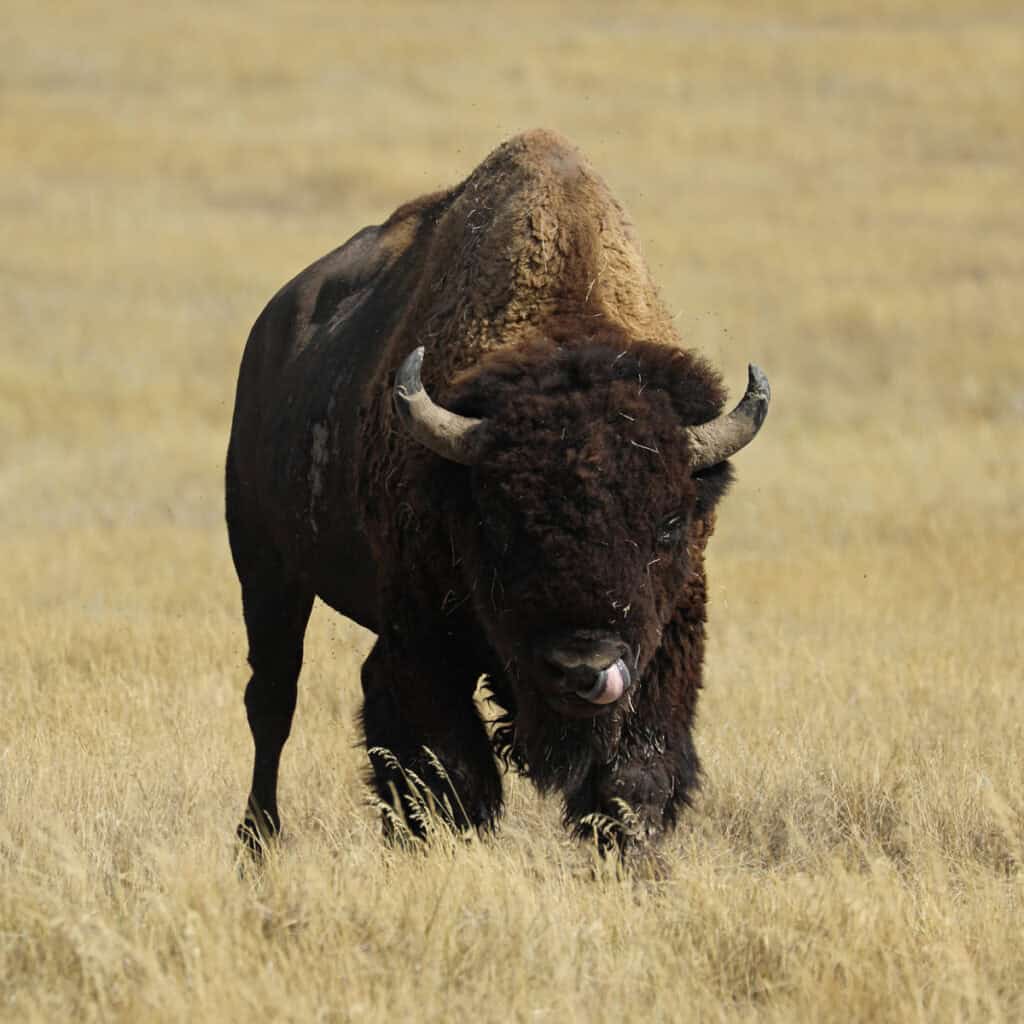
5. Badlands National Park: 1,200 Bison Across 64,000 Acres of Wilderness
Herd: North Unit Herd | Best Time: Spring and Fall
Badlands bison were reintroduced in the 1960s and have grown into a population of roughly 1,200 animals living within the park's 64,000-acre wilderness area in the North Unit. The Sage Creek Rim Road and the Sage Creek Basin Overlook are the most reliable spots for sightings, and there is nothing quite like watching a dark bison silhouette move across those eroded, rust-colored buttes at sunrise. Early morning and evening hours give you both better wildlife activity and better light for photos.
4. CSKT Bison Range: A Homecoming Story of the Flathead Reservation
Herd: Bison Range Herd | Best Time: Summer, Red Sleep Drive Open May-October
About an hour north of Missoula, this nearly 19,000-acre range on the Flathead Indian Reservation was established in 1908 and, since 2022, has been fully owned and managed by the Confederated Salish and Kootenai Tribes, who trace the herd's origins back to bison brought onto the reservation by tribal members in the 1870s. Around 350 bison roam the range, viewable along the self-guided Red Sleep Drive and lower Prairie Drive, a roughly 19-mile, two-hour loop with a visitor center that tells the herd's full history, including the tribes' role in saving the species from extinction. It is one of the more meaningful bison stops on this list, not just a scenic drive but a genuine homecoming story.
Other National Parks With Wild Bison Worth Knowing About
A few other national parks have wild bison too, just not the reliable, roadside odds of the destinations on this list. Worth knowing about if you happen to be in the area, but I would not build a bison-viewing trip around them:
- Grand Canyon National Park - The Kaibab Plateau herd roams the North Rim and adjacent national forest, but sightings are scattered and the North Rim is only open in summer.
- Great Sand Dunes National Park & Preserve - A large herd is ranched on partner land at the base of the dunes, but it is accessible by guided tour only, not a drive-through.
- Wrangell-St. Elias National Park & Preserve - Alaska's Copper River and Chitina River herds are among the wildest, most free-ranging bison left in the country, but seeing them usually means a fly-in trip into roadless backcountry.
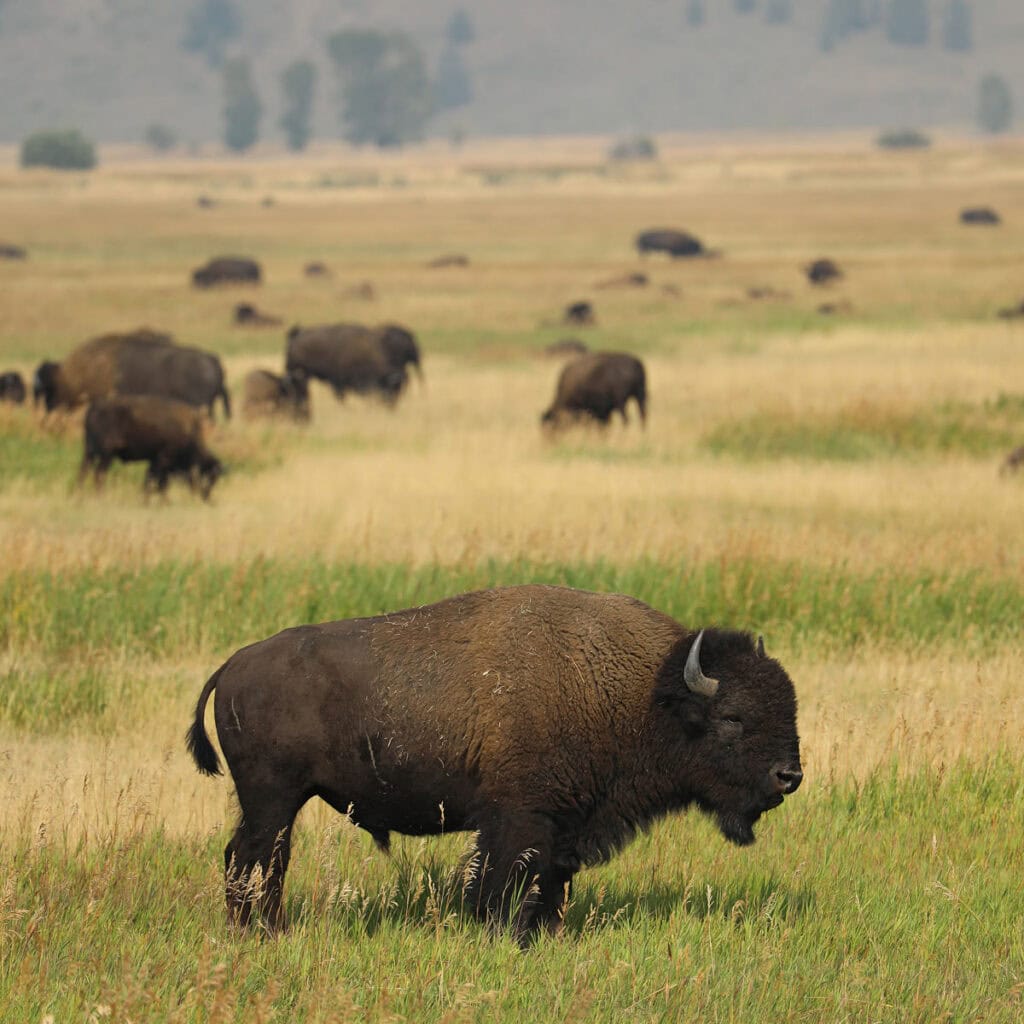
3. Grand Teton National Park: Bison With the Teton Range as a Backdrop
Herd: Jackson Herd | Best Time: Spring through Fall
The Jackson bison herd roams the sagebrush flats of Grand Teton with the jagged Teton Range as a backdrop, arguably the single most dramatic setting on this entire list. Mormon Row and Antelope Flats Road are the classic viewing areas, especially at sunrise when the historic barns, grazing bison, and snow-capped peaks line up for the kind of photograph that ends up on a calendar. Grand Teton and Yellowstone are frequently combined into one extended trip, and doing so gives you two very different bison landscapes in a single visit.
🦬 Sunset 4-Hour Grand Teton Wildlife Adventure
⭐ 4.9 Stars | 4 Hours | Small Group, Departs from Jackson | Check Rates and Availability
A small-group safari of just seven travelers in a custom vehicle with roof hatches and a window seat for everyone, timed to catch Grand Teton's wildlife, bison included, at their most active as the sun goes down.
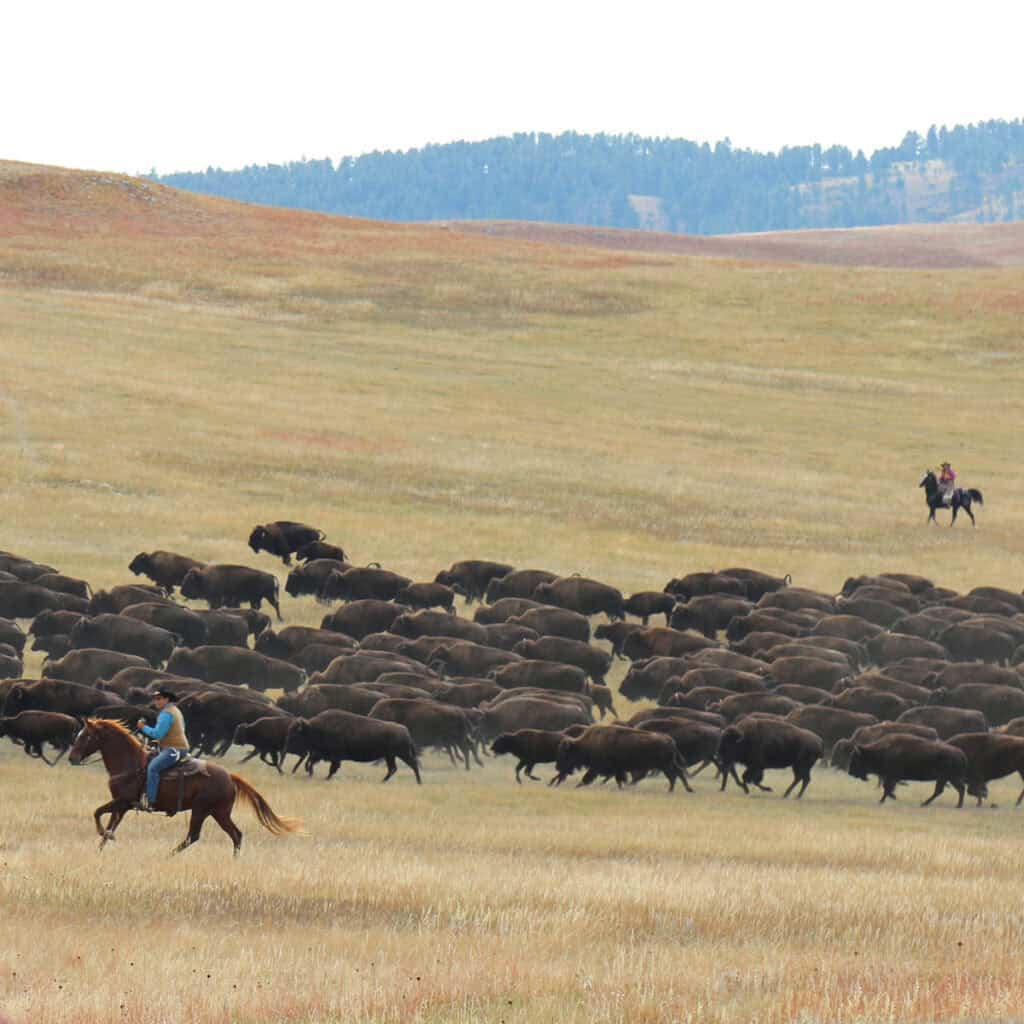
2. Custer State Park: One of America's Most Reliable Bison Viewing Locations
Herd: Custer Herd | Best Time: Year-Round, Peak Activity Morning and Evening
Custer State Park is home to one of the largest publicly owned bison herds on earth, roughly 1,400 animals, and the 18-mile Wildlife Loop Road all but guarantees a sighting, often in the form of a full-blown "bison jam" as the herd crosses the road at its own unhurried pace. Stop by the Bison Center at the Buffalo Corrals to learn how the herd is managed, and if you are visiting in late September, the annual Buffalo Roundup draws thousands of spectators to watch cowboys and cowgirls move the entire herd for their yearly health checks. This is the most reliable, most concentrated bison viewing on this list, hands down.
🦬 Full-Day Jeep Bison Safari, Custer State Park
⭐ 4.8 Stars | Full Day | Departs Rapid City | Check Rates and Availability
An open-top Jeep safari onto Custer State Park's private interior roads, well off the main Wildlife Loop, with a guide who tracks the herd daily and a picnic lunch included along the way.
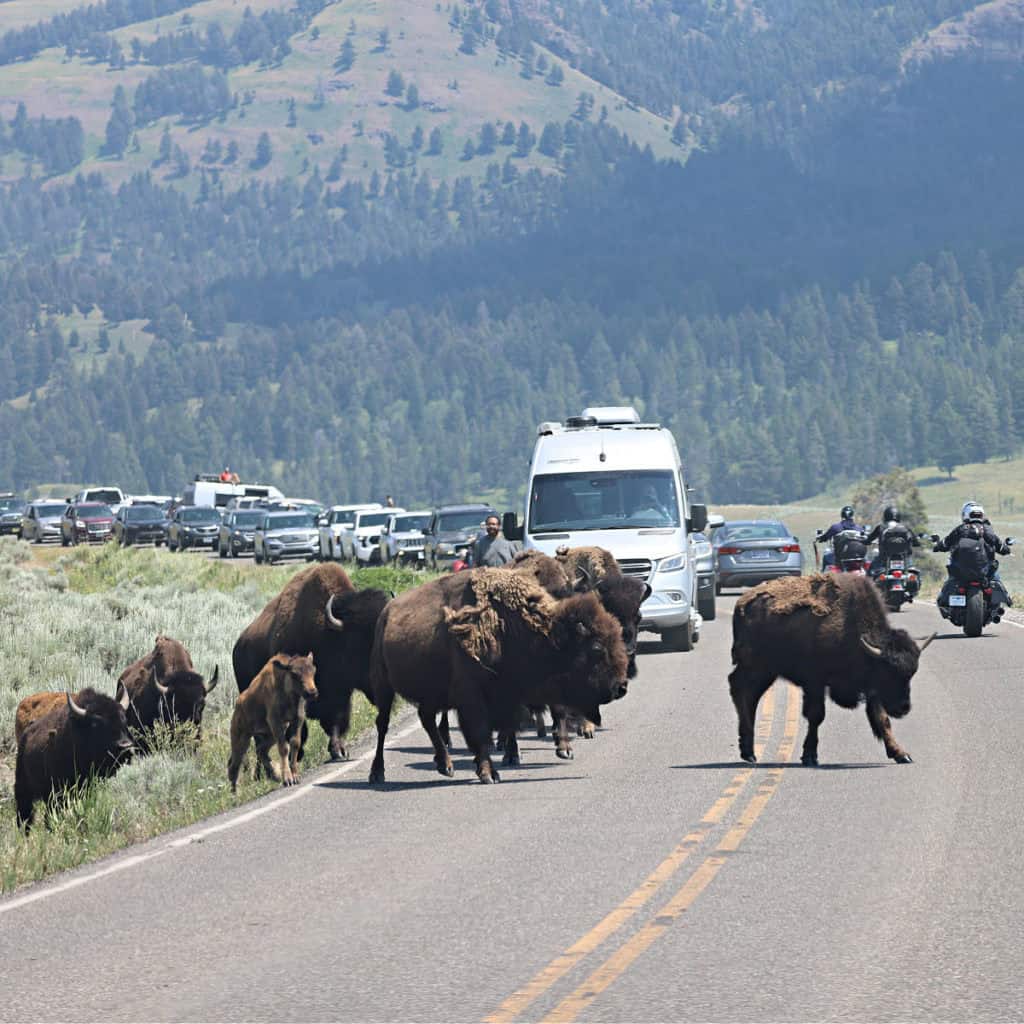
1. Yellowstone National Park: The Only Place Bison Have Lived Continuously Since Prehistoric Times
Herd: Yellowstone Herd | Best Time: April through November
Yellowstone is the only place in the country where bison have lived continuously since prehistoric times, and it holds the largest wild bison population in the United States, numbering in the thousands. Lamar Valley and Hayden Valley, often called the Serengeti of North America, offer wide open sightlines where entire herds move across the landscape in plain view. Solitary bulls wander far beyond the valleys too, and it is not unusual to find one standing on a boardwalk near a thermal feature, holding up traffic for a classic Yellowstone "bison jam." Bring patience, bring binoculars, and give every animal the space it deserves.
🦬 Yellowstone Hayden and Lamar Valley Wildlife Tour
⭐ 4.9 Stars | 8 Hours | Departs from Gardiner | Check Rates and Availability
A full day guided tour through both Hayden and Lamar Valley, Yellowstone's two best wildlife corridors, with lunch, snacks, and a guide who knows exactly where the bison, wolves, and bears tend to turn up.
Every one of these destinations tells a piece of the same larger story: an animal that once numbered in the tens of millions, was reduced to a few hundred by the late 1800s, and has clawed its way back through decades of dedicated conservation work, from federal agencies to state parks to the tribal nations who never stopped fighting for it. Whether you are watching a massive herd move across Lamar Valley or a smaller group grazing among six-foot prairie grass in Kansas, you are witnessing one of the great wildlife comeback stories in American history. Give them their space, keep your camera ready, and enjoy the moment.
Make sure to follow Park Ranger John on Facebook, Instagram, Pinterest, and TikTok

Leave a Reply