
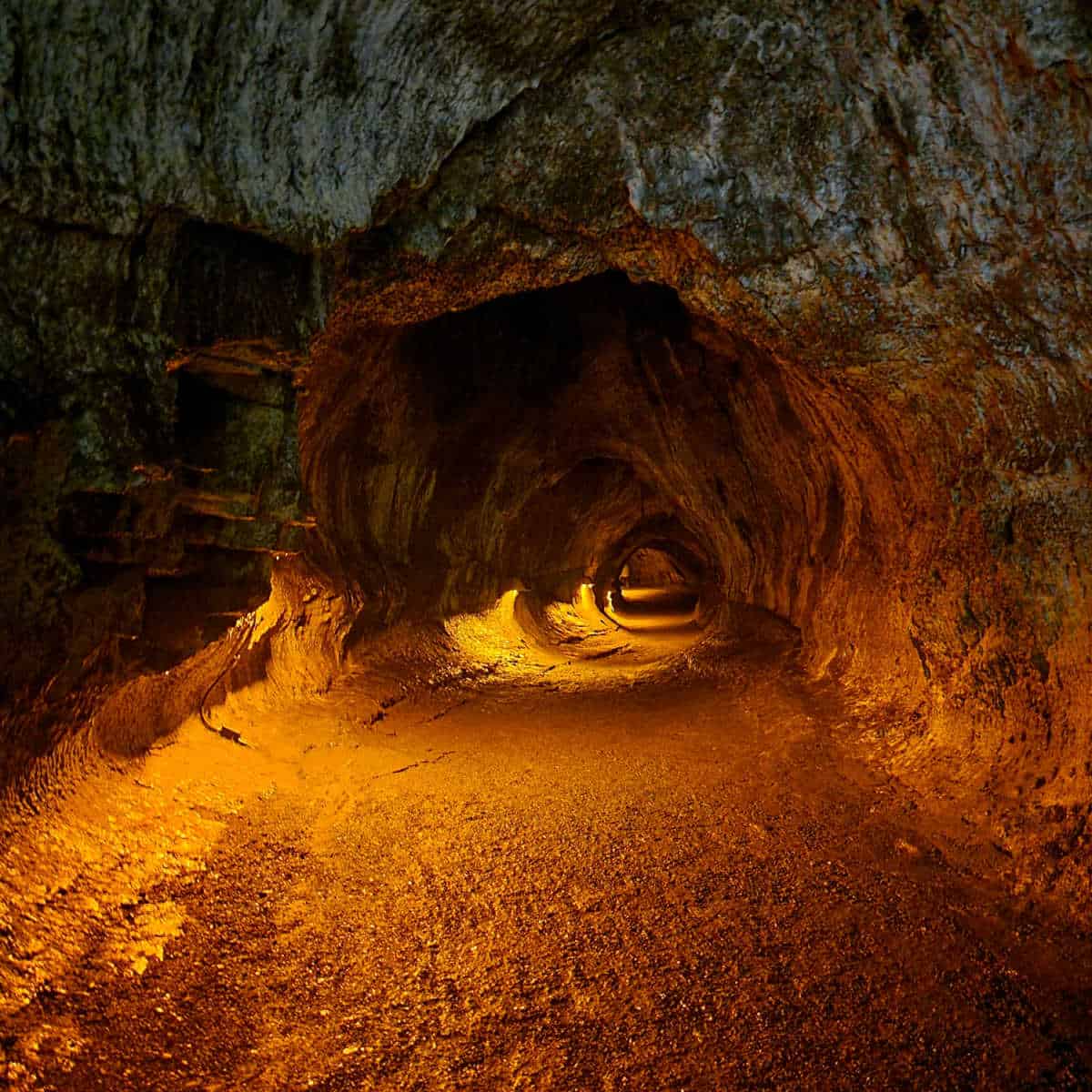
Nahuku Thurston Lava Tube in Hawaii Volcanoes National Park is one of the most amazing natural wonders you can visit and explore on the Big Island of Hawaii. The short walk provides an amazing opportunity to experience the power of volcanoes and lava tube geology
TL;DR Don't have time to read the full article? Here are my top finds:
🏨Hotels and Vacation Rentals
📍Hawaii National Park Tours
🐻 Save time! Buy your National Park Pass before your trip
Nahuku Thurston Lava Tube
The Nahuku Thurston Lava Tubes are one of the most popular things to do at Hawaiʻi Volcanoes National Park!
A visit to the lava tube gives park visitors a unique opportunity to not only learn, but see firsthand more about volcanic geology.
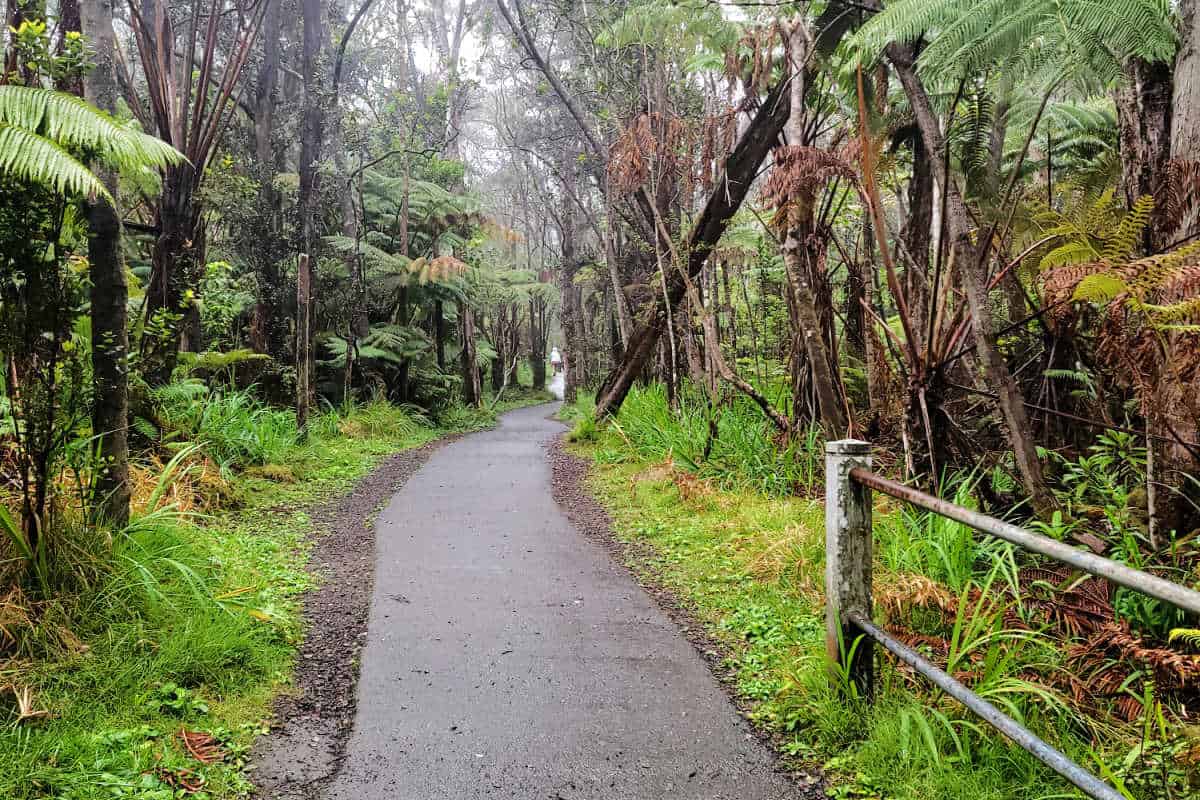
Visitors will also get to experience a canopy of Ohi's Lehua Trees and Hapu'u (fern trees) that dominate the understory of this tropical rainforest that receives over 100 inches of rain each year.
My personal favorite part of visiting the lava tube area is hearing the calls of native birds, both native and non-native. Perhaps if you are lucky, you will get to see one of the rare native species like 'apapane and apakihi. If you are really lucky, maybe you can spot an 'oma'o, a thrush only found on the Big Island of Hawaii!
Hawaii Volcanoes National Park Entrance Fee
Park entrance fees are separate from camping and lodging fees.
Park Entrance Pass - $30.00 Per private vehicle (valid for 1-7 days from the date of purchase)
Park Entrance Pass - Motorcycle - $25.00 Per motorcycle (valid for 1-7 days from the date of purchase)
Per-Person Entrance Pass - $15.00 Visitors 16 years or older who enter on foot, bicycle, or as part of an organized group not involved in a commercial tour.
Annual Park Entrance Pass - $55.00, Admits pass holder and all passengers in a non-commercial vehicle. Valid for one year from the month of purchase.
$40.00-$75.00 for Commercial Sedan with 1-6 seats and non-commercial groups (16+ persons)
$75.00 for Commercial Van with 7-15 seats
$100.00 for Commercial Mini-Bus with 16-25 seats
$200.00 for Commercial Motor Coach with 26+ seats
Learn more about National Park Passes for parks that have an entrance fee.
$80.00 - For the America the Beautiful/National Park Pass. The pass covers entrance fees to all US National Park Sites and over 2,000 Federal Recreation Fee Sites for an entire year and covers everyone in the car for per-vehicle sites and up to 4 adults for per-person sites.
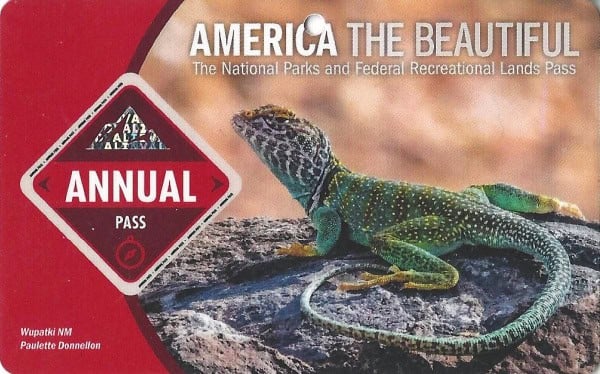
Buy your pass at this link, and REI will donate 10% of pass proceeds to the National Forest Foundation, National Park Foundation, and the U.S. Endowment for Forestry & Communities.
National Park Free Entrance Days -Mark your calendars with the free entrance days the National Park Service offers for US citizens and residents.
Nahuku Thurston Lava Tube Trail
- Distance: 0.5 mile short trail
- Elevation Gain/Loss: Approximately 50 feet
- Time: 30 minutes
- Trailhead Elevation: 3900'
- Trail Difficulty: Easy
One of my favorite parts of this trail is that it is in a cool tropical rainforest, a drastic difference from the sunny, hot, and dry Kona side that most tourists fly into when they go to the Big Island of Hawaii.
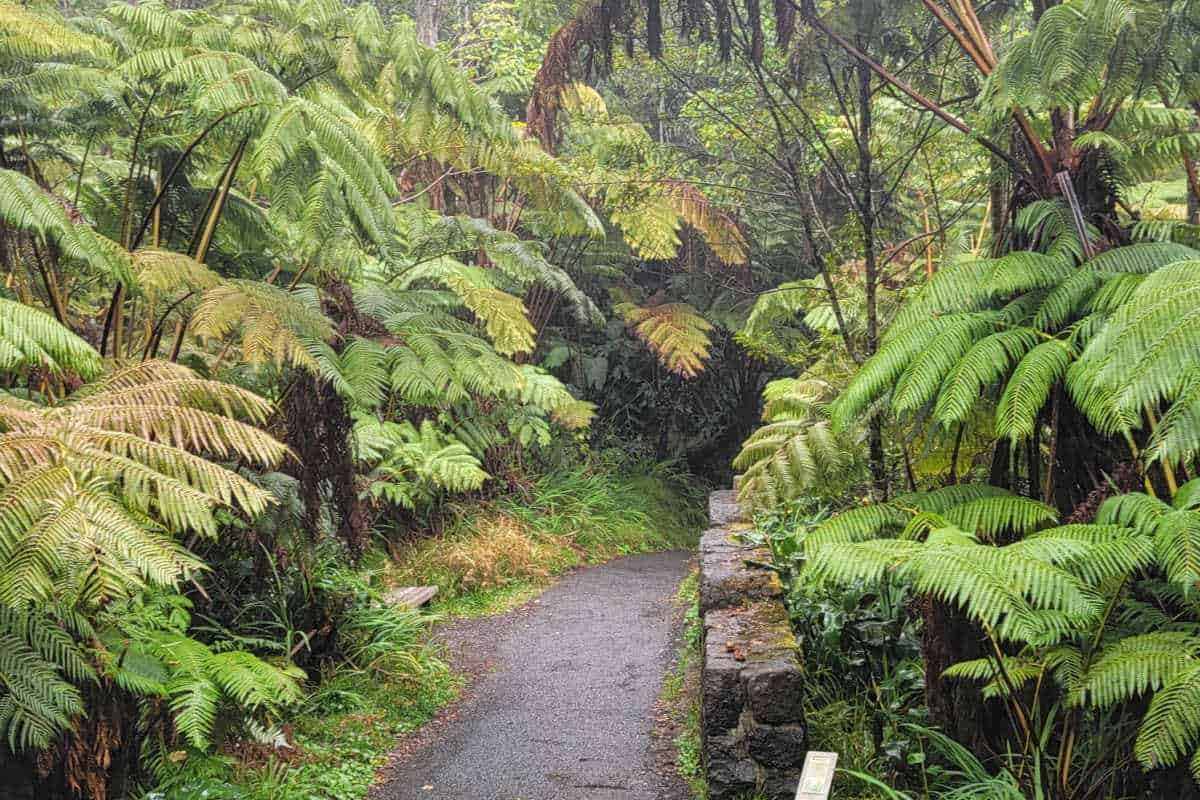
Every time I have taken this trail it has either rained or misted so I would count on some sort of precipitation. The lush green foliage is awe-inspiring and the air smells so clean and refreshing.
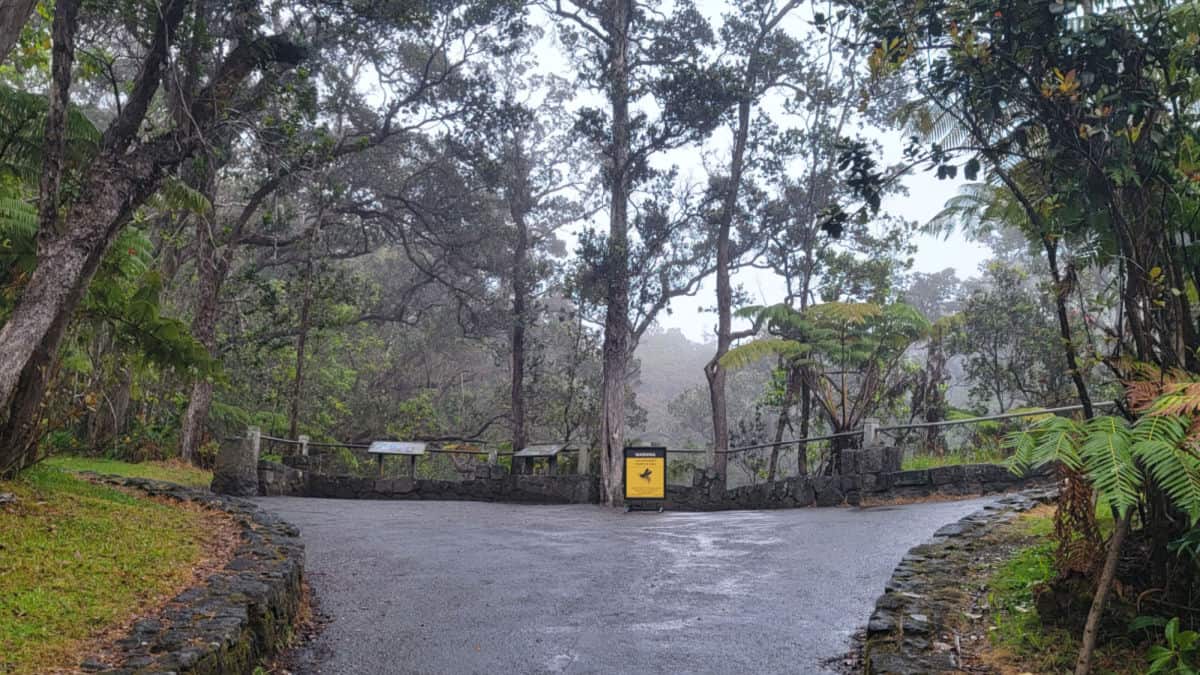
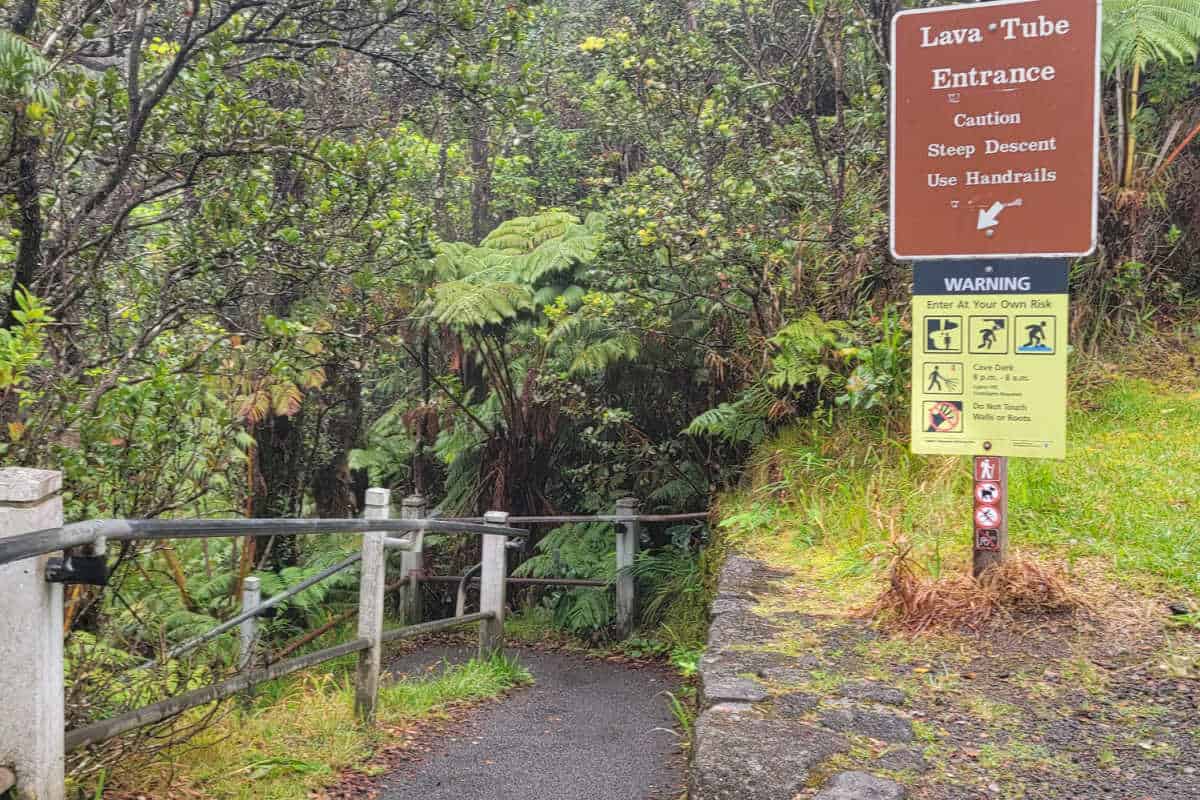
You can sit and hear the birds chirping although you rarely see one in the dense vegetation. The trail starts off to the right and then starts to descend in a series of switchbacks to the lava tube entrance.
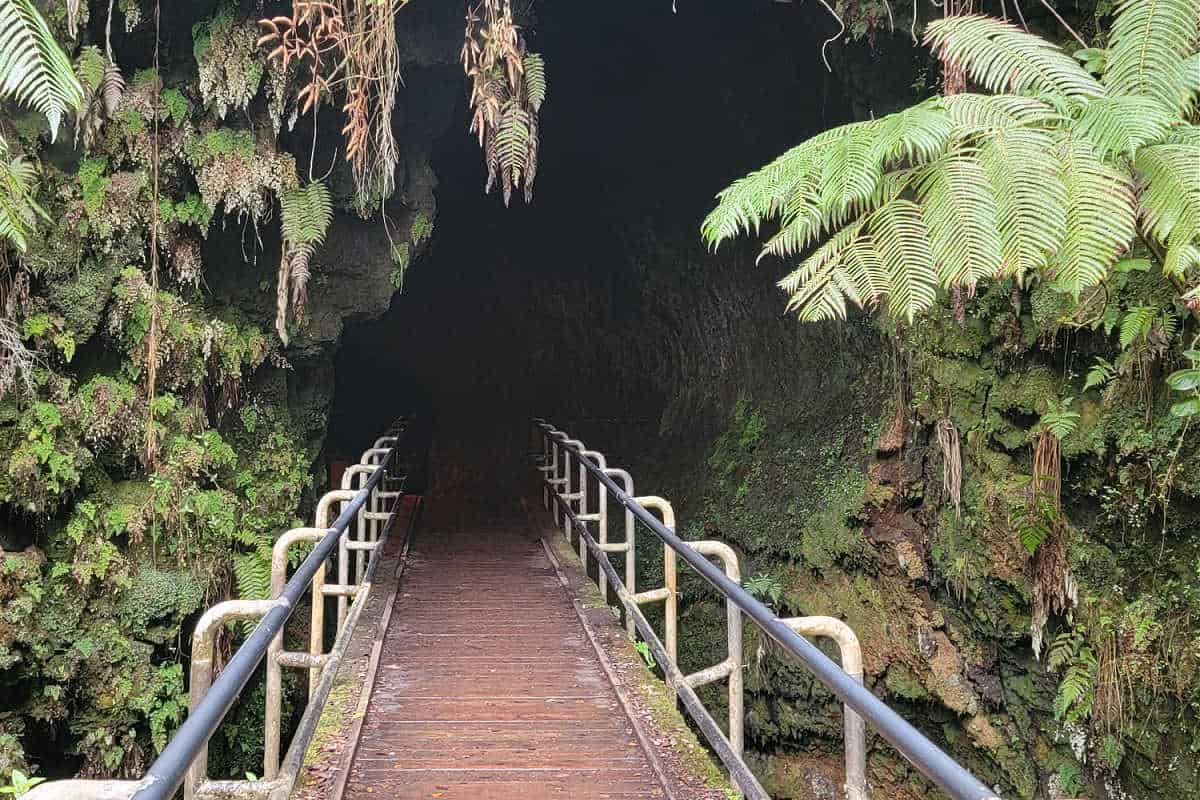
The trail is paved but is not ADA Accessible as it is narrow, steep, and has steps along the way. The entrance is definitely inspiring with lush vegetation surrounding the entrance.
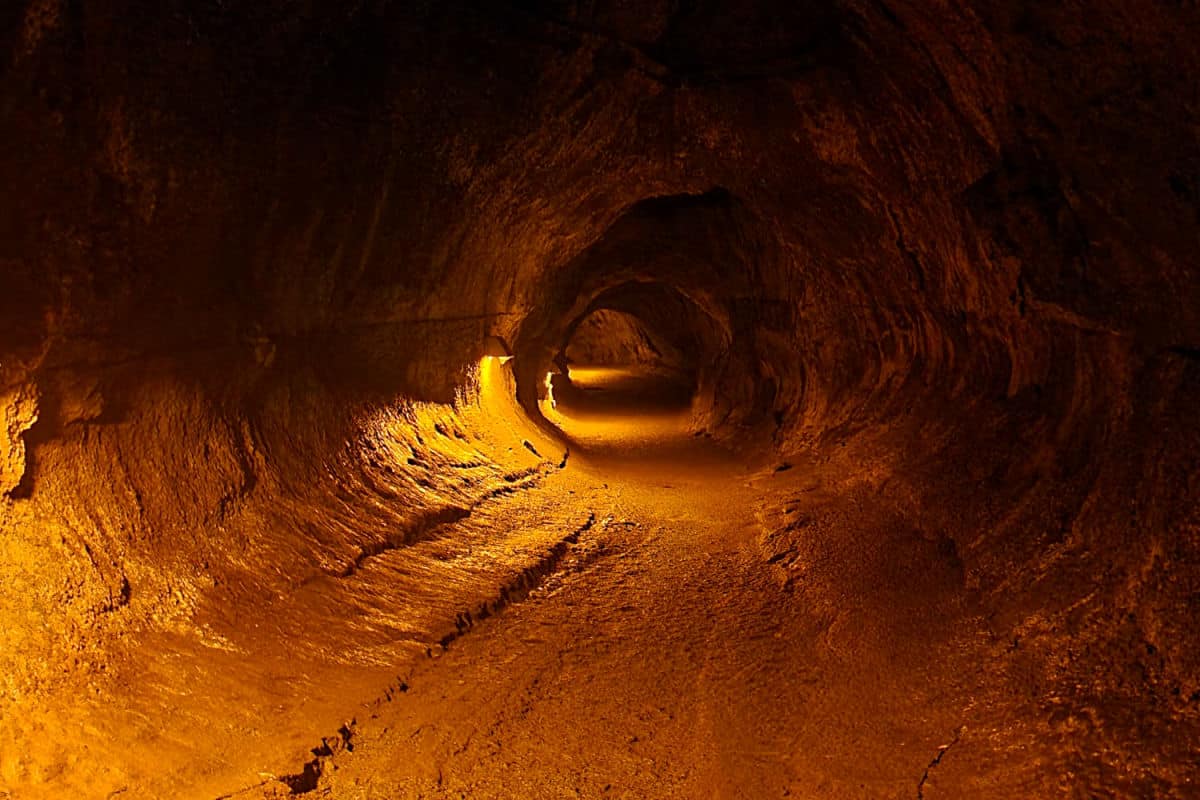
The hike through the lava tube is actually very easy and is only 400' long. The surface of the tube is relatively flat and the National Park Service has put lighting inside the tube making it easy to walk through.
Once you have made it through the lava tube, it is an easy hike back to the beginning of the trailhead through the rainforest.
Where is Thurston Lava Tube?
Nahuku Thurston Lave Tube is located 1.5 miles from the entrance to Hawai'i Volcanoes National Park heading south on Crater Rim Drive.
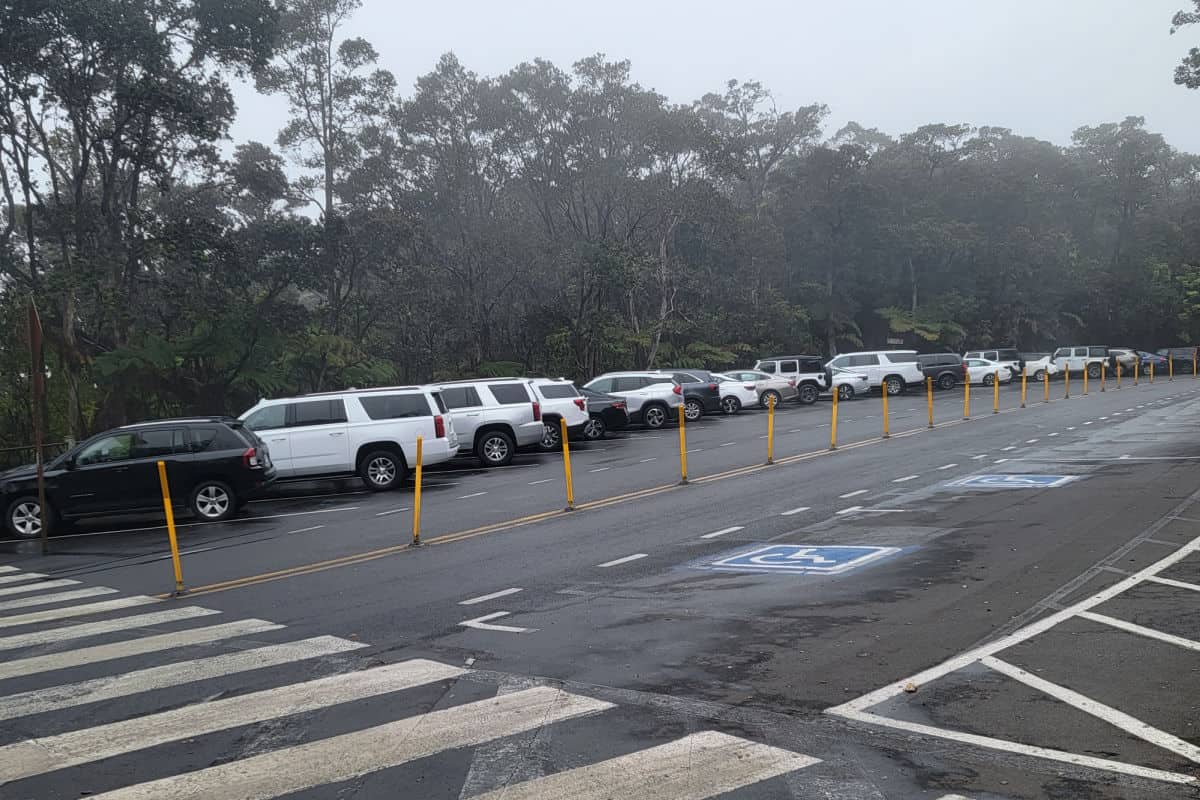
Parking: There is a parking area across from the entrance to the lava tube. One thing to know is it gets really busy during the middle of the day. You can also park at the Kilauea Iki parking lot.
Restrooms: are located near the lava tube and are open from 9 am to 5 pm
What is a Lava Tube?
A Lave tube, also known as a Pyrroduct, is a natural channel created by a river of lava from a volcanic vent that moves beneath a hardened surface of lava.
These tubes are created by the lava flow itself. As the molten lava flows, the outside surface is exposed to the much cooler surface air causing the top layer of lava to harden and turn into Basalt. Think of how a river freezes in the winter.
This hardened layer essentially acts as insulation to the lava underneath the hardening surface and gets the lava superheated in the core as there is no place for the heat to escape.
This in turn causes the lava to start heating the lower surface of the lava tube and begins a process known as thermal erosion.
As the rock underneath the lava tube heats up, it begins to erode away causing the lava tube to go deeper underneath the newly formed earth's crust just above the tube.
Eventually, the lava flow will stop and the hollow lava tube will be left behind as a reminder of the power of lava and volcanoes.
What does Nāhuku mean?
Nāhuku, the native Hawaiian name means "the protuberances," which refers to the lava drippings that once hung from the lava tube ceiling.
Unfortunately, the lava drippings disappeared due to souvenir collectors after the lava tube was discovered in 1913.
When you visit the lava tube imagine the roof covered in lava stalactites. How amazing would that have been!
How long is Thurston Lava Tube?
The nāhuku lava tube is 600 feet long.
The lava tube varies in height and width.
Don't worry there is more than enough space in this walk-through lava tube. The ceiling height is more than enough to comfortably walk through.
Is Thurston Lava Tube Open?
Yes, The lava tube is open 24 hours a day but the new electrical system that includes 12 energy-efficient amber LED electric lights to illuminate the 400-foot lava tube automatically turns on every day from 8 am until 8 pm.
Overnight Nahuku lava tube is pitch black with no lighting. If you plan to explore the lava tube before the lights turn on make sure to bring a great headlamp and flashlights.
Cell phones do not provide strong enough light to safely hike through the lava tube.
How old is Thurston Lava Tube?
Thurston Lava Tube was created over 550 years ago during an eruption of Kilauea. The eruption produced vigorous streams of lava which left the long, hollow tunnel behind when the river of lava drained away.
The lava tube was discovered in 1913 by Lorrin Thurston who was a local newspaper publisher.
Hiking through Thurston Lava Tube
Trailhead - Nāhuku (Thurston Lava Tube) parking area and Kīlauea Iki Overlook.
Hazards to be aware of - Potential hazards include rockfalls, low ceilings, standing water, tripping hazards, and low light conditions.
On the trail be sure to look for large rocks, tree roots, or any new cracks that may appear along the flat rock floor and trail.
Distance - The trail distance depends on if you park in the lava tube parking area or at the Kīlauea Iki Overlook.
- 1.5 mi (2.4 km) round-trip walk from Kīlauea Iki Overlook.
- 6.0 mi (9.7 km) round-trip from Devastation Trailhead (including the Kīlauea Iki loop)
Accessibility -
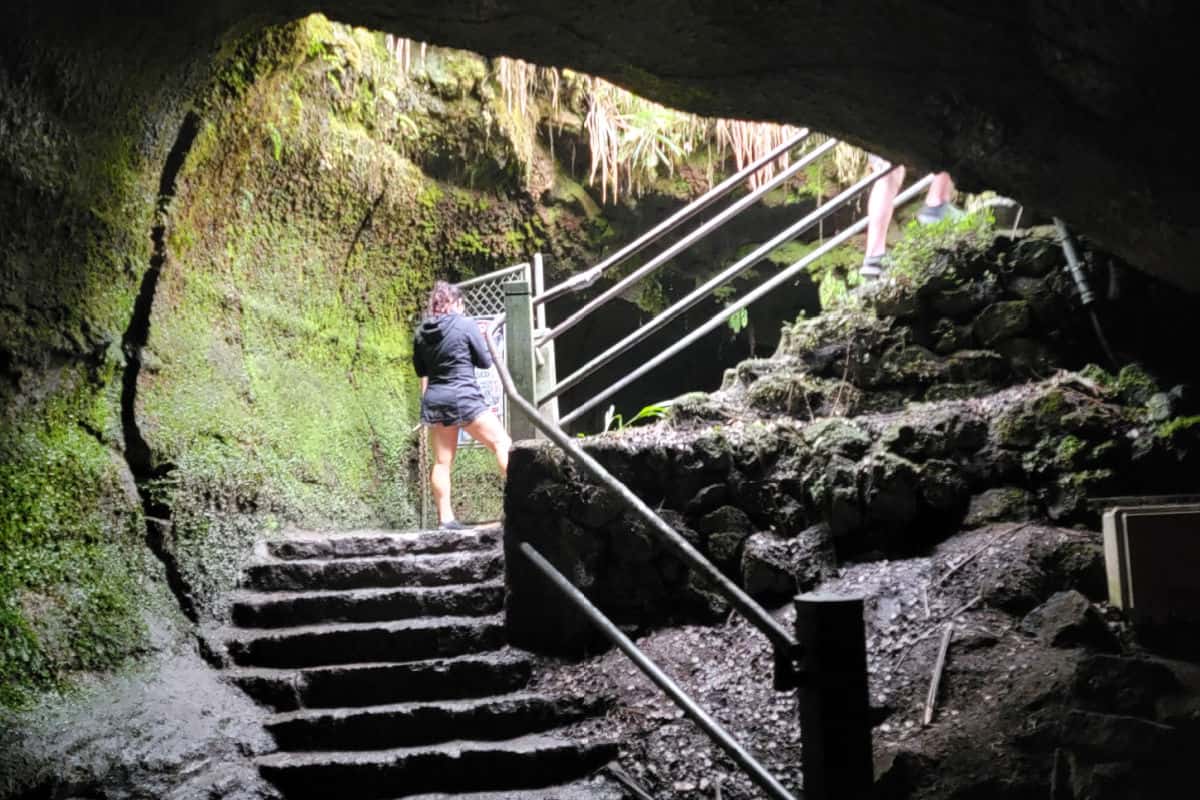
The trail is paved with handrails but this is not an ADA-accessible trail. The trail is oftentimes wet, is narrow, has several steps, and has several switchbacks to get to the entrance of the Lava Tube. There are several steps to get out of the Lava Tube as well.
The trail inside the lava tube is not paved but is mostly flat.
What to bring with you
Sturdy Shoes - Be prepared for the trail to be wet and slippery.
Flashlight - If you plan to walk the trail while it is dark a cell phone flashlight is not bright enough to illuminate the lava tube caves.
Sweatshirt/Jacket - I know you are in Hawaii but the cool damp rainforest environment can be a bit chilly while walking through the lava tube. The average temperature in the cave is around 55 degrees Fahrenheit.
Camera Gear we use
We are big fans of using great camera gear to get amazing photos while traveling.
Canon R5 - We recently upgraded to the R5 after using a Mark 5 for years. We are loving the camera shutter speed and quality of images.
Canon 100 - 500mm - We use the Canon 100-500 for wildlife photography.
Camera Rain Cover - A rain cover will help protect your camera during rain showers but also when photographing waterfalls.
Camera Cleaning Kit - Cameras can get dirty, beat up, and dusty while in the parks. We like having a cleaning kit with us so we can do on the spot touch ups.
Extra Camera Batteries - We suggest always having one or two extra camera batteries with you. There is nothing worse than going to take a shot and the battery dies.
Extra Memory Cards - We use Extreme PRO SanDisk cards
Nearby Things to do in Hawaii Volcanoes
Hawaii Volcanoes NP Hikes - check out all of the epic hiking trails in the park.
Kilauea Iki Overlook - This overlook is just down from the lava tube parking area. It provides an amazing view over the Kilauea Iki Crater. The crater is 3,000 feet across and a mile long. The floor is 400 feet below the overlook and you can see Mauna Loa in the distance.
Crater Rim Road - Explore Crater Rim Road and check out Uekahuna, Kilauea Overlook, Steaming Bluff (Wahinekapu), Sulphur Banks (Ha'akulamanu), Pu'upua'i Overlook, and Keanakako'i Crater.
Chain of Craters Road - Chain of Craters Road gives you the opportunity to drive down to the Pacific Ocean and see historic lava flows. The road is 18.8 miles to the end of the road. There are no services along the road. At the bottom of the road you can walk out to see the Holei Sea Arch and explore the Pu'uloa Petroglyph Trail.
Visitor Center - The visitor center is located just past the main entrance station to the park. There is a great museum, gift shop, and park rangers available to answer questions.
Where to stay when visiting Hawaii Volcanoes National Park
I have personally visited the Big Island of Hawaii several times, and I even proposed to Tammilee at Kekaha Kai (Kona Coast) State Park just north of the Kona Airport!
Volcano House is the only lodge in Hawaii Volcanoes National Park and is perfect for exploring the Park. However, there are only 33 guest rooms, which can make it a challenge to find a room available. Here are a couple of options.
Make sure to book your stay at Colony I at Sea Mountain if you want to be close to the park and far from large cities like Kona and Hilo. Here you can relax in paradise and enjoy other top destinations like Punalu'u Black Sands Beach, South Point, Green Sands Beach, and the town of Naalehu, home of the Punalu'u Bake Shop! This is a condo/timeshare style hotel that provides numerous amenities, including barbecue grills, a furnished kitchen, a washer/dryer, a coffee/tea maker, and a TV with cable. The only drawback is that you are far from several of the top attractions that Hawaii offers like going to a luau, organized tours, etc.
Hilo has several hotel options and an international airport. Hilo is known as the wet side of the island, and where many locals live. I have never stayed on the Hilo side, but I know there is the Grand Naniloa Hotel Hilo, a Doubletree by Hilton - 4-star hotel in the heart of Keaukaha.
Most visitors to Hawaii prefer to stay on the Kona side of the island and fly into the Kona Airport (KOA). Kona is known as the dry, sunny side of the island with numerous tourist activities.
If you are looking for a fantastic hotel with breathtaking views, I would suggest the Westin Hapuna Beach Resort. This contemporary Hawaiian-style resort comes to life with lush, manicured gardens, endless blue skies, and ocean views to die for. Did I mention that it is just steps away from Hapuna Beach, one of the best beaches on the island!
My other favorite hotel is the Courtyard by Marriott King Kamehameha's Kona Beach Hotel. You will love this resort as it is on the north end of Alii Drive (the heartbeat of Kona) and makes the perfect place to explore both Kona and the Island. They also have great A/C, nice rooms, and the Island Breeze Luau is fantastic!
Camping in Hawaii Volcanoes National Park
There are two drive-in campgrounds inside the Hawaii Volcanoes National Park. The sites are available on a first-come first served basis and no fees are charged, except the entrance fee to the park. Stays are limited to 7 days a month and 30 days a year.
This campground, located at 4000 feet elevation off Highway 11, is situated in an area with eucalyptus and ohi'a trees. Facilities include restrooms, barbecue pits, and picnic tables. There is also a large pavilion with tables and two fireplaces. At night, temperatures can drop into the 30s. The days can be cool in the 60s. It is recommended that you bring warm clothing and a tent with you.
Located about 5 miles down the Hilina Pali Road, Kulanaokuaiki Campground has only three campsites, two of which are accessible by wheelchair. Picnic tables and barbecue grills are provided, but there is no water and only a vault-type toilet. No dogs are allowed.
Hawaii Volcanoes National Park Tours
Big Island in a Day: Volcanoes, Waterfalls, Sightseeing, and History
⭐️ Rating: 4.9 out of 5 Stars with 6400+ Reviews! | ⏳ Tour Length: 11 hours | 🚌Check Rates and Availability
This is a full-day small group nature tour where you will get to experience black sand beaches, waterfalls, and Hawaii Volcanoes National Park. If you are lucky, you may even spot a Hawaiian Green Sea Turtle. Stops include:
- a coffee farm
- Punalu'u Black Sand Beach
- Hawaii Volcanoes National Park
- Nahuku - Thurston Lava Tube
- Rainbow Falls
- Akaka Falls State Park, and more!
Small Group Big Island Twilight Volcano and Stargazing Tour
⭐️ Rating: 4.9 out of 5 Stars with 1500+ Reviews! | ⏳ Tour Length: 12 hours | 🚌Check Rates and Availability
Pack in some of Hawaii's most mesmerizing sights during this Big Island full-day and twilight volcano tour. Of course, the highlight is exploring Volcanoes National Park and experiencing stargazing in a secluded location-perfect for taking in views of the night sky. Stops include:
- Bay View Farm to take a tour of a Kona Coffee Farm
- Punalu'u Bake Shop, which is known for its famous Hawaiian sweet bread. My personal favorite is the coconut turnovers, and Tammilee's personal favorite is the Lilicoi(Passion Fruit) malasadas.
- Punalu'u Black Sand Beach - A great Black Sand Beach that oftentimes has Green Sea Turtles!
- Hawaii Volcanoes National Park
- Nahuku - Thurston Lava Tube
- Saddle Road is a secluded road which is ideal for stargazing
Big Island Spectacular Helicopter Tours by Blue Hawaiian
⭐️ Rating: 4.8 out of 5 Stars | ⏳ Tour Length: 1 hour and 45 minutes | 🚁 Check Rates and Availability
Fly above Hawaii's spectacular peaks, coasts, and valleys on this helicopter tour of the Big Island. Watch lava bubble up out of volcanoes, fly over the lush rain forests of the Hamakua Coast, and complete your trip with views of the waterfalls lining the Kohala Mountains. Only a helicopter tour lets you see so many of Hawaii's charms on a single ride and from an unforgettable perspective.
Read more about - Big Island Spectacular Helicopter Tour
Make sure to check out all the great tours available on the Big Island of Hawaii and at Hawaii Volcanoes National Park.
Additional Big Island of Hawaii Resources
Kaloko-Honokohau National Historical Park
Pu'ukohola Heiau National Historic Site
Puuhonua o Honaunau National Historical Park - City of Refuge
Check out all of the National Parks in Hawaii
The park is managed by the National Park Service. Check out the official park website for updates and latest conditions.
Make sure to follow Park Ranger John on Facebook, Instagram, Pinterest, and TikTok



Leave a Reply