
Hawaii Volcanoes National Park Hikes will put you in the heart of this park's (Or Pele's) fiery past, present, and future!
The park is rich in Hawaiian culture, features unique lava formations, tropical rainforests, and a diverse array of wildlife, all of which are unique to the planet.
TL;DR Don't have time to read the full article? Here are my top finds:
🏨Hotels and Vacation Rentals
📍Hawaii National Park Tours
🐻 Save time! Buy your National Park Pass before your trip
Hawaii Volcanoes National Park Hikes
These Big Island hiking trails showcase some of my favorite places in the world to go for a hike! You can explore the lush rainforest near the visitor center and hike through a lava tube or hike past steam vents along the Ha'akulanu (Sulphur Banks) Trail.
You can go a little higher up to some of Hawaii's native forest and see birds only found in Hawaii, or hike across the Kīlauea Iki crater floor.
You can also hike to sea level or aim higher to the Mauna Loa Trail that ends at a staggering 13,678 feet in elevation.
That's the beauty of hiking in Hawaii Volcanoes. There are several amazing Hawaii volcano trails with over 100 miles located within the park's 523 square miles.
Best Time to Hike Hawaii Volcanoes National Park
Hawaii Volcanoes National Park offers year-round hiking, but timing your visit can dramatically enhance your experience. The park sits at varying elevations, creating diverse microclimates that affect trail conditions throughout the year.
April through October typically brings drier, sunnier weather. This is ideal for hiking across exposed lava fields like the Kilauea Iki Crater floor and the Pu'uloa Petroglyphs trail. However, this is also peak tourist season, meaning crowded parking lots and busy trails, especially at popular spots like Thurston Lava Tube.
November through March sees more rainfall, particularly in the higher elevation rainforest areas, but do not let that discourage you. Light rain makes the forest trails like Kipukapuaulu absolutely magical, with vibrant green foliage and active bird life. Afternoon showers are common but usually brief. Just pack a rain jacket and embrace the tropical atmosphere!
For the best experience, arrive at the popular trailheads before 9 AM or after 3 PM to avoid crowds. Early morning offers cooler temperatures, which are the best for wildlife viewing, especially for birding at Kipukapuaulu.
If you are hoping to see active lava, evening visits provide the most dramatic glowing views, though volcanic activity constantly changes. Always check current conditions with park rangers before planning your hike.
Easy Hikes in Hawaii Volcanoes National Park
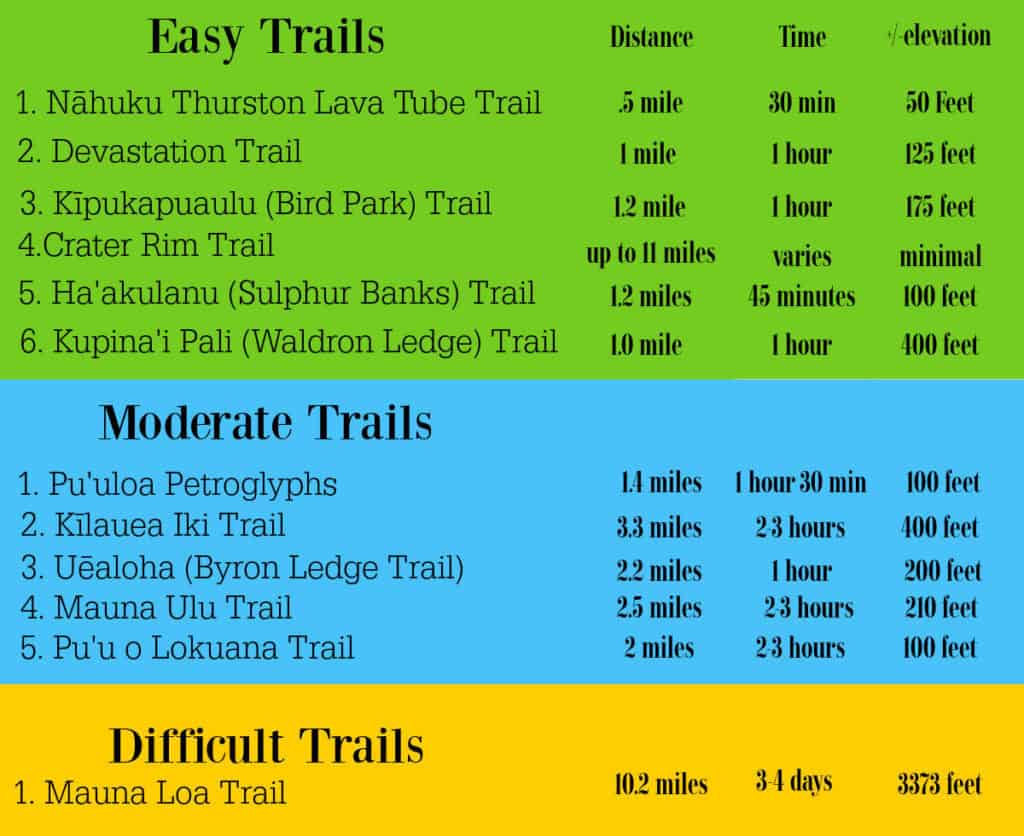
Nāhuku Thurston Lava Tube Trail
- Trail Length: 0.5 Miles
- Elevation gain: Approx. 50 feet
- Difficulty rating: Easy Trail
- Time: 30 minutes
- Location: Nāhuku (Thurston Lava Tube) parking area and Kīlauea Iki Overlook (Overflow Parking Area)
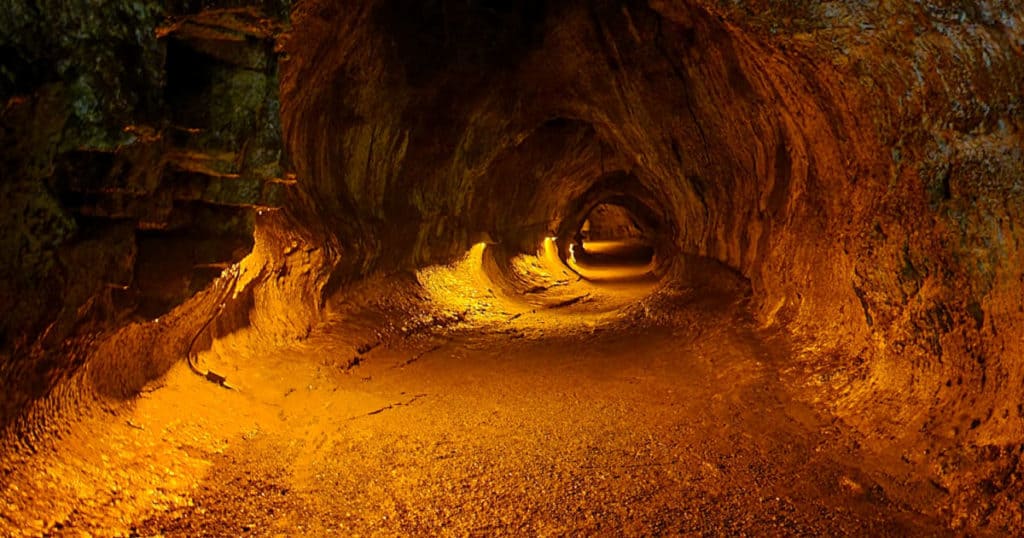
Quite simply, this is one of my favorite short hikes in the National Park System! The cool, lush, dense rainforests are very welcoming after spending a few days in the intense sun from the Kona side of the island! I am pretty sure I have had everything from mist to rainfall each time I have taken this hike and loved it. You also hear all the birds chirping, surrounded by lush flora and fauna, and then the big payoff, the lava tube. What an experience!
Devastation Trail
- Trail Length: 1.0 Mile Roundtrip
- Elevation gain: 125 feet
- Difficulty rating: Easy Trail
- Time: Approximately 1 hour
- Location: Devastation Trail parking lot on Crater Rim Drive.
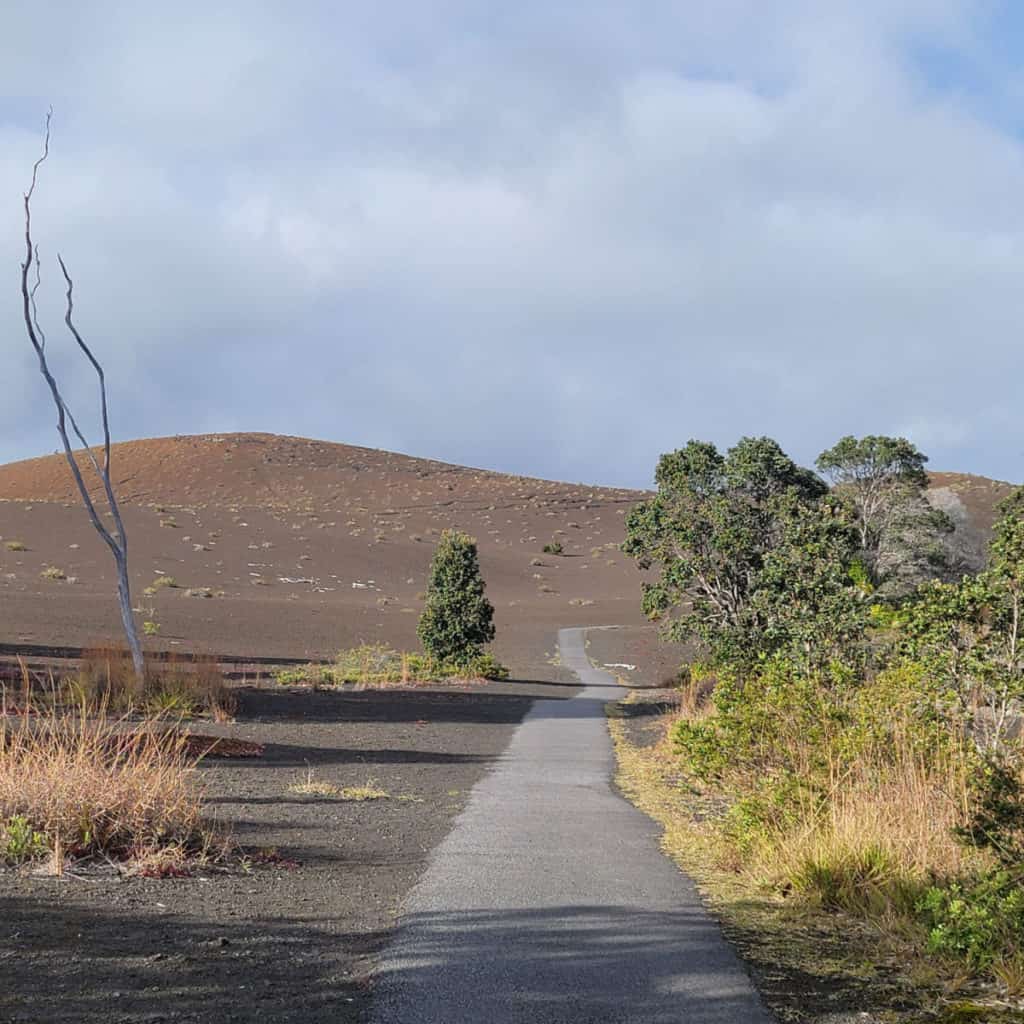
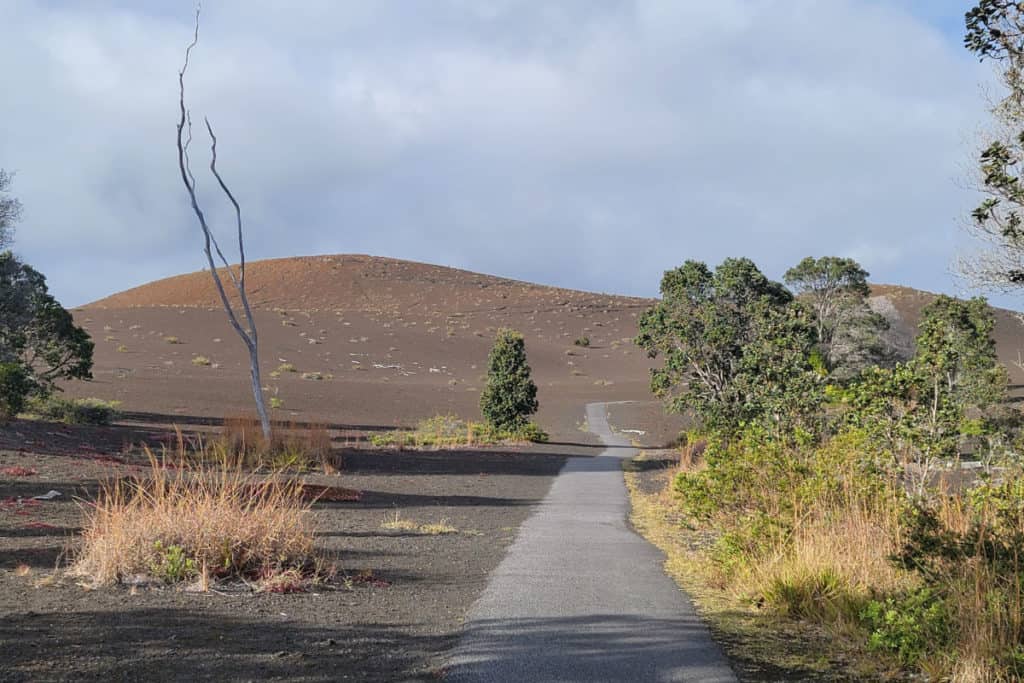
This is another fantastic short hike! You start at the trailhead in trees, and after a short walk, you begin to understand the name of the trail. You quickly see the trees and vegetation along the trail get replaced with rock/cinder from the 1959 Kilauea Iki eruption.
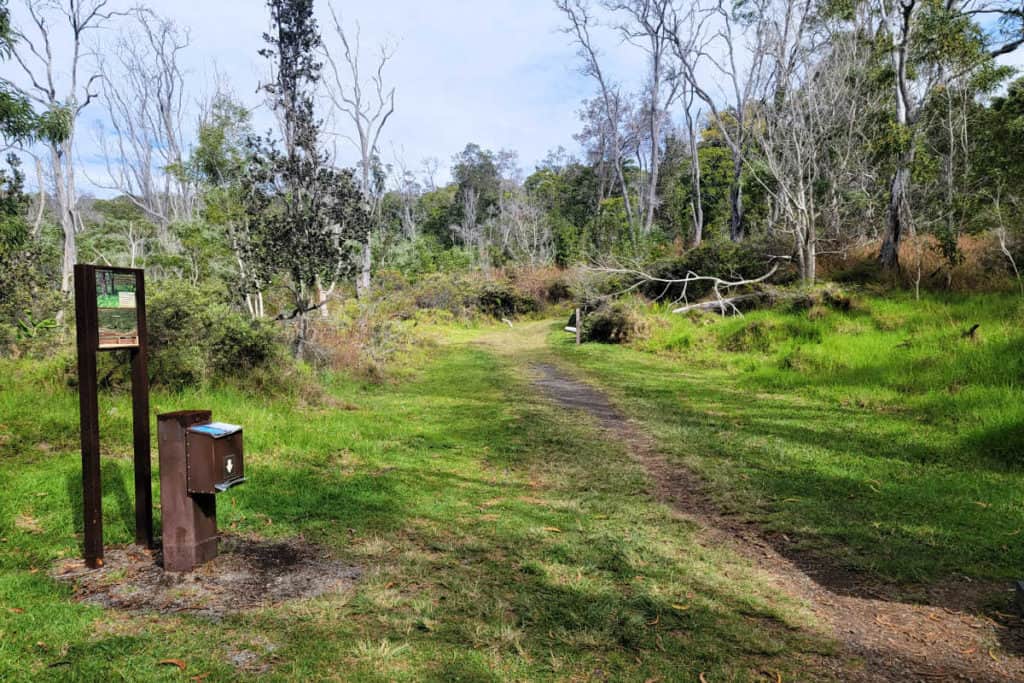
Kīpukapuaulu (Bird Park) Trail
- Trail Length: 1.2 Mile Roundtrip loop trail
- Elevation gain: approximately 175 feet
- Difficulty rating: Easy Trail
- Time: Approximately 1 hour (Unless you are a bird nerd like me, then perhaps hours!)
- Location: Kīpukapuaulu parking area.
The Kīpukapuaulu Trail was constructed in 1934 by the Civilian Conservation Corps, commonly known as the (CCC). This trail is full of plant and animal diversity and is commonly called Bird Park.
The Kipukapuaulu has more native tree species per acre than any other forest in Hawaii Volcanoes National Park. It is common to see Kalij pheasants in this area, although they are not native to the islands and do create a problem with weed growth and native vegetation.
Bird enthusiasts, like myself, are looking for some of the native birds that make this home, including the ʻelepaio, 'Apapane, 'Amakihi, and the 'I'iwi.
The best way to enjoy this trail is by choosing the best time to visit. Early mornings or later in the afternoon are the ideal times to visit because that is when birds are most active.
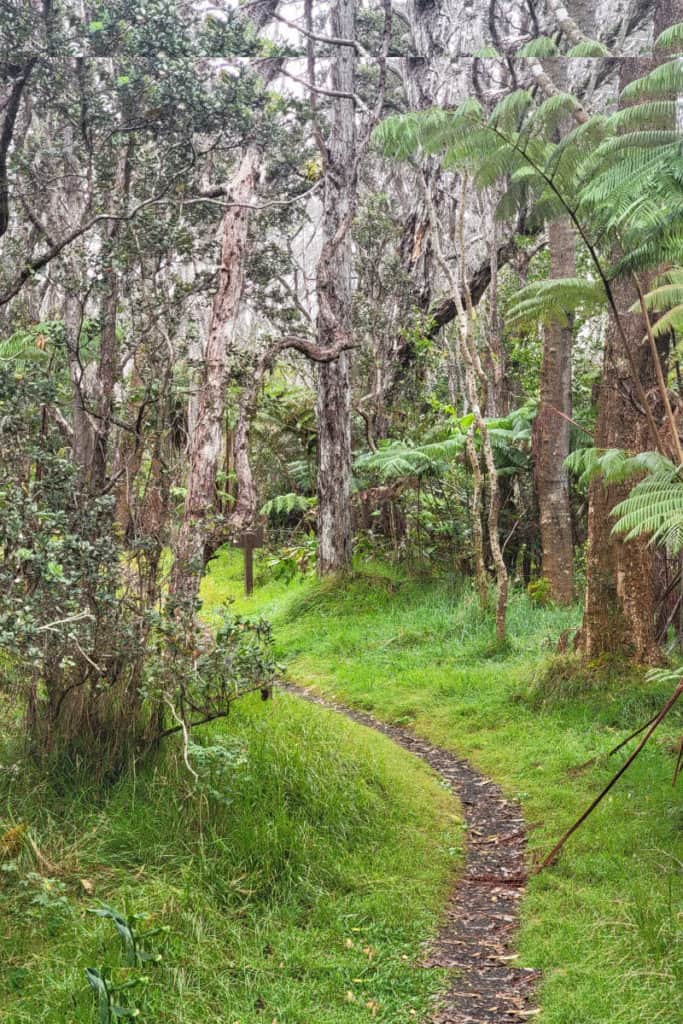
Crater Rim Trail
- Trail Length: Up to 11 miles. The trail stretches from Uekahuna to just past Keanakako'i Crater around Kilauea's Summit. This includes the Kupina'i Pali (Waldron Ledge) trail. (Most go on a portion of the trail of their choosing)
- Elevation Gain: minimal
- Difficulty Rating: easy
- Time: a few minutes to several hours
- Location: Multiple trail access locations throughout the park along the Kilauea Caldera
This is a great trail that has a little bit of everything, all the while following along the edge of one of the most active volcanoes on planet earth! Here you will get to see rainforests, steam vents, and much more!
Ha'akulanu (Sulphur Banks) Trail
- Trail Length: 1.2-mile round trip
- Elevation Gain: approximately 100 feet
- Difficulty Rating: easy
- Time: 30 minutes to an hour
- Location: Kīlauea Visitor Center parking lot toward the Volcano Art Center Gallery
This easy trail will take you by several steam vents that have volcanic gases seeping out of the ground along with groundwater steam. These gases are rich in carbon dioxide, sulfur dioxide, and hydrogen sulfide. It's really cool how close you get to the steam vents, and children like them too!
- It is advised that any park visitor who has heart or respiratory conditions (such as asthma), pregnant women, infants, or young children should avoid this walk.
Kupina'i Pali (Waldron Ledge) Trail
- Trail Length:1.0 mile round-trip to the overlook
- Elevation Gain: Minimal
- Difficulty Rating: Easy
- Time: Approximately 45 minutes to 1 hour
- Location: Across the street from Kilauea Visitor Center, to the left of the Volcano House, and down the service road to the rock wall on the left.
Also known as the earthquake trail, as it was originally part of the Crater Rim Drive. On 11/16/83, a 6.7 magnitude earthquake struck the island and destroyed portions of the Crater Rim Road. The road was rerouted to its current location, which we see today, but now visitors take this trail and can see firsthand the effects of earthquakes.
Moderate Hikes in Hawaii Volcanoes National Park
Puʻuloa Petroglyphs
- Trail Length: 1.4 Miles round trip out and back trail
- Elevation gain: approximately 100 Feet
- Difficulty rating: Moderate Hike
- Time: One to one and a half hours
- Location: Puʻuloa parking area on Chain of Craters Road.
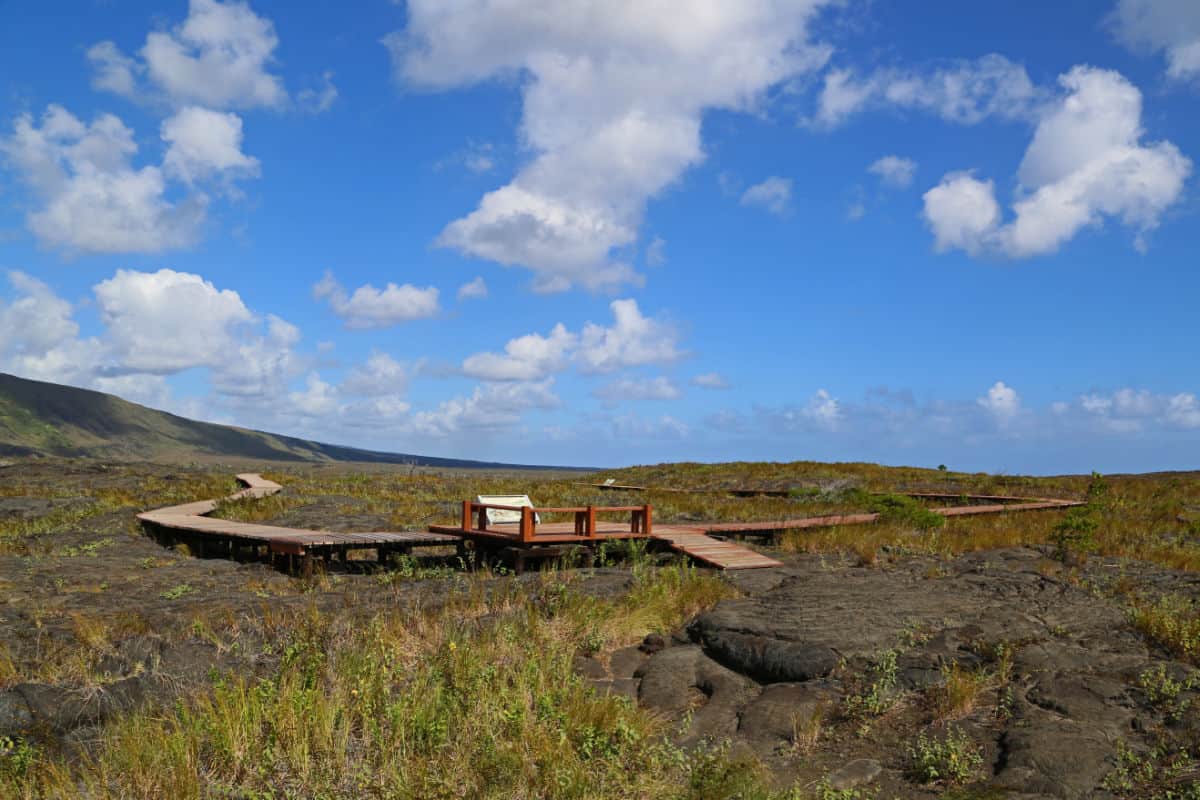
Although there is little elevation gain, this is definitely a moderate trail. You quickly find that this 1.4-mile out-and-back trail crosses over a lava field and requires you to actually watch where you are going.
There is no shade on this trail, and it warms up considerably when you reach this trailhead after leaving the comfortable tropical rainforest higher up on the mountain!
Is it worth your time then? YES! Soon enough, you will reach the boardwalk pictured above, and you will be surrounded by petroglyphs!
Kīlauea Iki Trail
- Trail Length: 3.3-mile loop trail
- Elevation Gain: approximately 400 feet
- Difficulty Rating: Moderate to Strenuous
- Time: 2 to 3 hours
- Location: Kīlauea Iki Overlook. Parking can be extremely limited
This is one of the busiest trails in the park, so make sure to arrive early if you want to ensure that you get a parking spot at the trailhead; otherwise, you will have to park further away and hike to the trailhead.
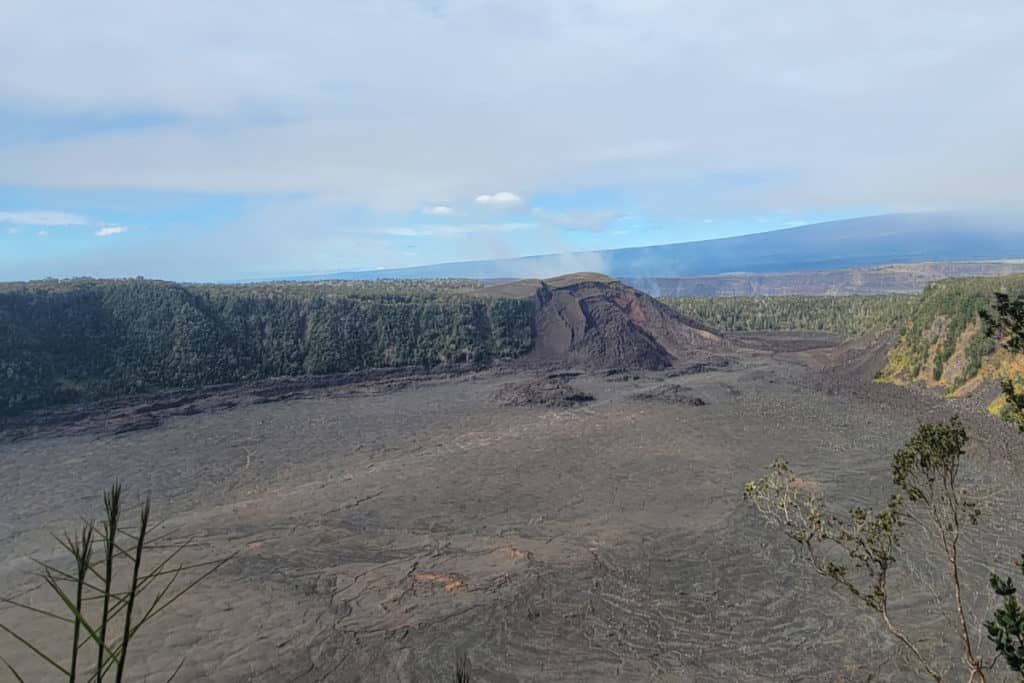
One of the things that I found fascinating was the fact that you can see hikers on the trail below as it crosses the Kīlauea Iki crater.
This is also the place of the Kilauea Iki erupted in 1959, and lava began pouring into the lake bed below from a half-mile fissure.
Multiple vents consolidated into one main vent, and over the next five weeks, lava continued to fill until eventually burying itself in a bed of lava. Today, the lava lake has turned into rock, and hikers walk across this fascinating feature.
Uēaloha (Byron Ledge Trail)
- Trail Length: 2.2 miles round-trip
- Elevation Gain: 200 Feet
- Difficulty: Moderate
- Time: One hour
- Location: Devastation Trailhead
The trail starts from the Devastation Trailhead. Take a left and it will take you to the Uealohe (Byron Ledge) trail.
This hike will take you to fantastic views of the Pu'upua'i Cinder Cone and glimpses into the Kaluapele (Kilauea Caldera)
Mauna Ulu Trail
- Trail Length: 2.5 Miles Roundtrip
- Elevation Gain: 210 feet
- Difficulty: Moderate
- Time: 2-3 hours
- Location: Mauna Ulu Trailhead on Chain of Craters Road
One of the fun features of this trail is that on a clear day, you can see both Mauna Loa and Mauna Kea! You also hike past lava trees and get great views of the Mauna Ulu lava shield.
The hike ends with a steep climb up Pu'u Huluhulu Cinder Cone.
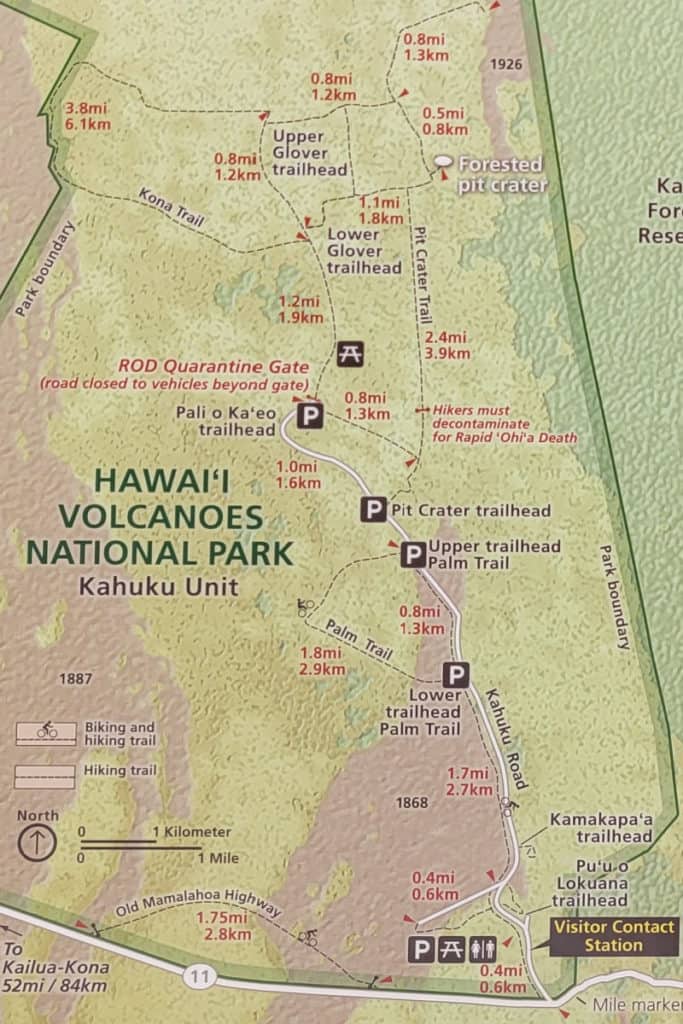
Pu'u o Lokuana Trail
- Trail Length: 2 miles loop trail
- Elevation Gain: 100 feet
- Difficulty: Moderate
- Time: One to one and a half hours
- Pu'u Lokuana Trailhead is located just past the visitor contact station at the Kahuku District of Hawaii Volcanoes National Park.
Pu'u Lokuana means grassy hill ahead, but the name actually refers to an intense downpour of cinder from the fountains of lava that once stood here.
The trail will take you through pastures and lava fields before hiking to the top of a cinder cone with breathtaking views!
Strenuous/Difficult Hikes in Hawaii Volcanoes National Park
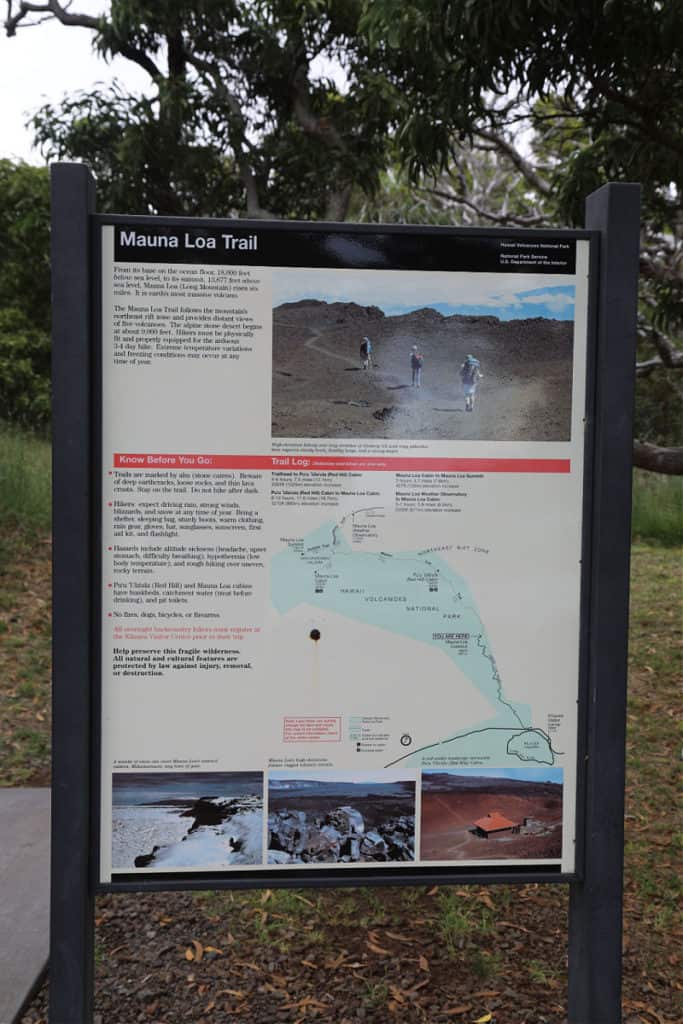
Mauna Loa Trail
- The Mauna Loa summit is currently accessible only via the ʻĀinapō Trail. Hiking from the Red Hill Cabin along the Mauna Loa Trail or from the Mauna Loa Observatory Trail is not permitted at this time. For your safety, plan accordingly and use only designated routes.
Trail Length: 15 miles Out and Back to Puʻuʻulaʻula and an additional 23.2 mi from Puʻuʻulaʻula Cabin to Summit Cabin
Elevation gain: 3375 feet from the trailhead to Puʻuʻulaʻula and another 3650 feet to reach the summit of Moku'aweoweo Caldera.
Difficulty rating: Strenuous, actually, I would consider this a challenging hike
Time: Depends on how long you want to stay and travel. A backcountry permit is required for overnight stays. Limited space is available for stays in cabins
Location: The Trailhead is at the Mauna Loa Lookout
Are you looking for an ultimate adventure? Does hiking to the summit of the world's largest active volcano sound appealing? If so, Mauna Loa is your peak!
If you were to measure Mauna Loa from the base of the volcano on the ocean floor to the summit of the volcano, Mauna Loa is over 30,000 feet tall! That's taller than Mount Everest.
Now that you have decided you want to hike this trail, make sure to come prepared, as it can be extremely rewarding but is not a simple day hike. Hikers here should be in excellent physical shape, know their limitations, have made reservations, obtained permits, researched, and come prepared.
The elevation gain is significant and ends at a whopping 13,678-foot summit of Mauna Loa. Make sure to read all the information on the NPS page about hiking to Mauna Loa before attempting.
I hope this list of the best hikes in Hawaii Volcanoes National Park helped you plan the perfect itinerary for your time in the park!
Luckily, there are hikes available for every experience level, so even if it's your first time hiking, you'll find plenty of opportunities to practice. Just make sure you acclimatize properly in order to adjust to the altitude.
Have you ever visited Hawaii Volcanoes National Park? What are some other incredible hikes worth tackling? If you have any other recommendations, please feel free to drop them in the comment section below!
Accessibility
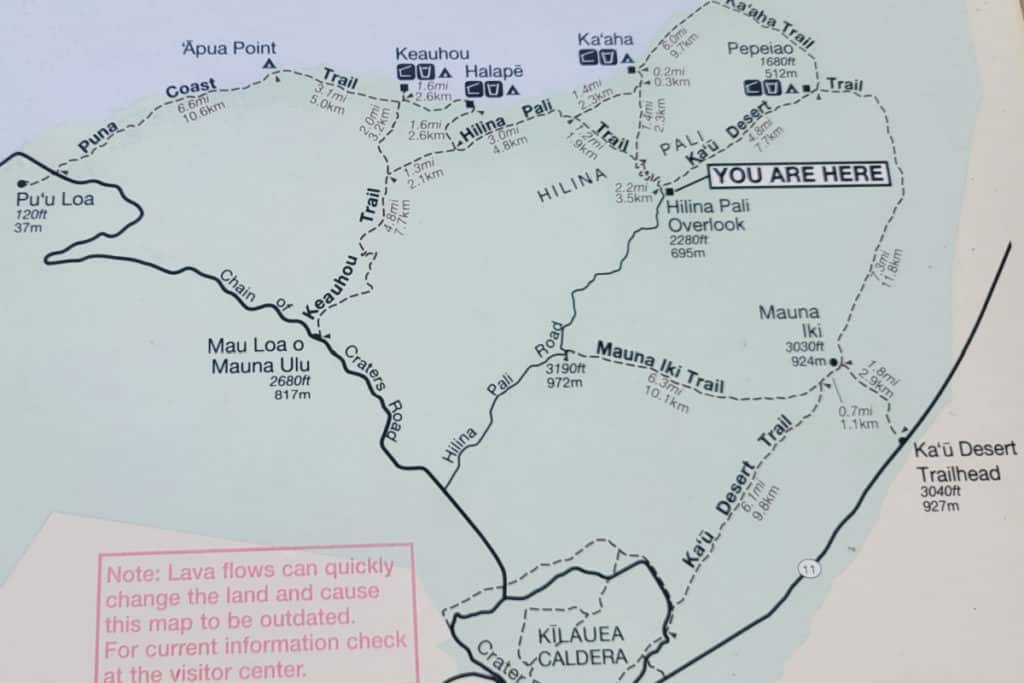
The National Park Service strives to make the parks accessible to all. Hawaii Volcanoes National Park has several landmarks that are easily accessible, like visitor centers, self-guided trails, campgrounds, scenic lookouts, and more.
There are three accessible trails within the park -
- Devastation Trail
- Kūpinaʻi Pali (Waldron Ledge)
- Kīpukapuaulu Trail
Safety Tips for Hiking at Hawaii Volcanoes: Vog, Elevation, and Trail Hazards
Hiking in an active volcanic landscape requires extra awareness and preparation.
Make sure to always check for current weather conditions and updates at the Kilauea Visitor Center before heading out, as volcanic activity, air quality, and trail closures can change without notice.
Vog (volcanic smog) containing sulfur dioxide can cause serious respiratory issues, headaches, and increased fatigue even in healthy individuals. Check air quality reports before your hike and avoid areas with heavy volcanic fumes, particularly if you have asthma, heart conditions, or are pregnant.
Cellular service is unavailable in many portions of the park and should not be relied upon; always carry the ten essentials. Make sure to tell someone your specific hiking plans and your expected return time before heading out.
For high altitude hikes like Mauna Loa, take elevation sickness seriously. Symptoms include severe headache, nausea, dizziness, and shortness of breath, and can be life-threatening.
Make sure to give yourself time to acclimate before heading out onto the trail, and make sure to descend immediately if you have symptoms and they start to worsen.
Make sure to stay on marked trails, as lava crusts can collapse, and hidden cracks pose serious fall hazards. Lava can also be very sharp and can cause serious lacerations if you fall.
Common Questions about Hawaii Volcanoes National Park Hikes
What are the most popular and best hiking trails in Hawaii Volcanoes National Park?
Kilauea Iki Trail, Devastation Trail, and Nāhuku Thurston Lava Tube Trail are probably the most popular trails in the park
What are the best easy hikes in Hawaii Volcanoes National Park?
Three of the best easy hikes include the Kīpukapuaulu (Bird Park) Trail, Devastation Trail, and Nāhuku Thurston Lava Tube Trail
Are pets allowed on trails in Hawaii Volcanoes National Park?
Pets are prohibited on all front-country and backcountry trails in the Park.
What is my favorite hike in Hawaii Volcanoes National Park?
I'm a bird nerd, so needless to say, I love exploring for native Hawaiian birds along the Kīpukapuaulu (Bird Park) Trail
Can you hike to see active lava in Hawaii Volcanoes National Park?
One thing to remember is that the volcanic conditions/lava flow can change at any time!
View the eruption update courtesy of the USGS Hawaiian Volcano Observatory for the most up-to-date information.
Our friends over at 2TravelDads wrote this epic Hawaii Lava Glow article filled with tips on seeing the lava.
Make sure to keep an eye out for rope lines and hazard signs! The park designates areas that may have potentially lethal volcanic fumes, unpredictable rim collapses, hidden earth cracks, and other hazards.
Check the air quality before and during your visit.
Do you need a permit to hike in Hawaii Volcanoes NP?
Currently, you do not need a permit to go hiking in the park. You will need a permit if you plan to enjoy backcountry camping off of one of the longer trails.
For backcountry camping, there is a non-refundable $10.00 fee per trip, in addition to the park entrance fee. The fee is good for up to 10 people and 7 nights per permit.
All eight backcountry campsites (Ka'aha, Halapē, Keauhou, 'Āpua Point, Nāpau, Pepeiao Cabin, Red Hill Cabin, and Mauna Loa Cabin) require a permit, with a stay limit of three consecutive nights at one site.
What should I wear when hiking in Hawaii Volcanoes NP?
We always suggest having the ten essentials with you when hiking. Hawaii Volcanoes NP Hikes can have different trail conditions from other parks.
You need to be prepared for walking on uneven lava rock, depending on the trails you plan to explore.
Make sure to bring a first aid kit, a trail map, a signaling device, plenty of water, sunscreen, a hat, sunglasses, and anything you need for the day.
Hikers are required to pack out everything they pack in.
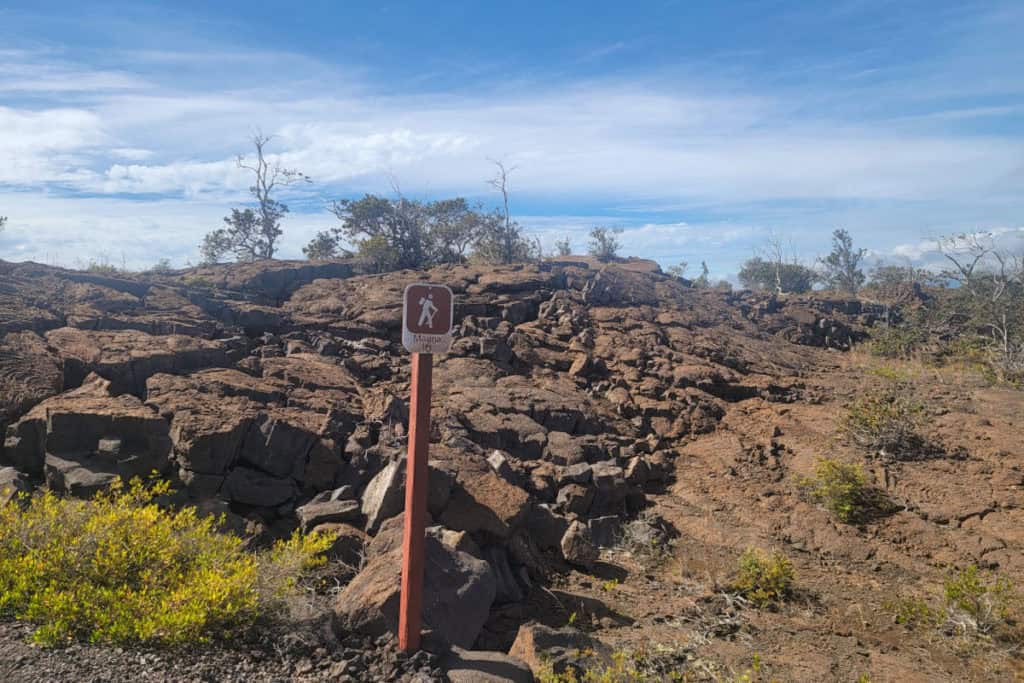
Hawaii Volcanoes National Park Tours
Big Island in a Day: Volcanoes, Waterfalls, Sightseeing, and History
⭐️ Rating: 4.9 out of 5 Stars with 6400+ Reviews! | ⏳ Tour Length: 11 hours | 🚌Check Rates and Availability
This is a full-day small group nature tour where you will get to experience black sand beaches, waterfalls, and Hawaii Volcanoes National Park. If you are lucky, you may even spot a Hawaiian Green Sea Turtle. Stops include:
- a coffee farm
- Punalu'u Black Sand Beach
- Hawaii Volcanoes National Park
- Nahuku - Thurston Lava Tube
- Rainbow Falls
- Akaka Falls State Park, and more!
Small Group Big Island Twilight Volcano and Stargazing Tour
⭐️ Rating: 4.9 out of 5 Stars with 1500+ Reviews! | ⏳ Tour Length: 12 hours | 🚌Check Rates and Availability
Pack in some of Hawaii's most mesmerizing sights during this Big Island full-day and twilight volcano tour. Of course, the highlight is exploring Volcanoes National Park and experiencing stargazing in a secluded location-perfect for taking in views of the night sky. Stops include:
- Bay View Farm to take a tour of a Kona Coffee Farm
- Punalu'u Bake Shop, which is known for its famous Hawaiian sweet bread. My personal favorite is the coconut turnovers, and Tammilee's personal favorite is the Lilicoi(Passion Fruit) malasadas.
- Punalu'u Black Sand Beach - A great Black Sand Beach that oftentimes has Green Sea Turtles!
- Hawaii Volcanoes National Park
- Nahuku - Thurston Lava Tube
- Saddle Road is a secluded road which is ideal for stargazing
Big Island Spectacular Helicopter Tours by Blue Hawaiian
⭐️ Rating: 4.8 out of 5 Stars | ⏳ Tour Length: 1 hour and 45 minutes | 🚁 Check Rates and Availability
Fly above Hawaii's spectacular peaks, coasts, and valleys on this helicopter tour of the Big Island. Watch lava bubble up out of volcanoes, fly over the lush rain forests of the Hamakua Coast, and complete your trip with views of the waterfalls lining the Kohala Mountains. Only a helicopter tour lets you see so many of Hawaii's charms on a single ride and from an unforgettable perspective.
Read more about - Big Island Spectacular Helicopter Tour
Make sure to check out all the great tours available on the Big Island of Hawaii and at Hawaii Volcanoes National Park.
Where to stay when visiting Hawaii Volcanoes National Park
I have personally visited the Big Island of Hawaii several times, and I even proposed to Tammilee at Kekaha Kai (Kona Coast) State Park just north of the Kona Airport!
Volcano House is the only lodge in Hawaii Volcanoes National Park and is perfect for exploring the Park. However, there are only 33 guest rooms, which can make it a challenge to find a room available. Here are a couple of options.
Make sure to book your stay at Colony I at Sea Mountain if you want to be close to the park and far from large cities like Kona and Hilo. Here you can relax in paradise and enjoy other top destinations like Punalu'u Black Sands Beach, South Point, Green Sands Beach, and the town of Naalehu, home of the Punalu'u Bake Shop! This is a condo/timeshare style hotel that provides numerous amenities, including barbecue grills, a furnished kitchen, a washer/dryer, a coffee/tea maker, and a TV with cable. The only drawback is that you are far from several of the top attractions that Hawaii offers like going to a luau, organized tours, etc.
Hilo has several hotel options and an international airport. Hilo is known as the wet side of the island, and where many locals live. I have never stayed on the Hilo side, but I know there is the Grand Naniloa Hotel Hilo, a Doubletree by Hilton - 4-star hotel in the heart of Keaukaha.
Most visitors to Hawaii prefer to stay on the Kona side of the island and fly into the Kona Airport (KOA). Kona is known as the dry, sunny side of the island with numerous tourist activities.
If you are looking for a fantastic hotel with breathtaking views, I would suggest the Westin Hapuna Beach Resort. This contemporary Hawaiian-style resort comes to life with lush, manicured gardens, endless blue skies, and ocean views to die for. Did I mention that it is just steps away from Hapuna Beach, one of the best beaches on the island!
My other favorite hotel is the Courtyard by Marriott King Kamehameha's Kona Beach Hotel. You will love this resort as it is on the north end of Alii Drive (the heartbeat of Kona) and makes the perfect place to explore both Kona and the Island. They also have great A/C, nice rooms, and the Island Breeze Luau is fantastic!
Hawaii Volcanoes National Park Entrance Fee
Park entrance fees are separate from camping and lodging fees.
Park Entrance Pass - $30.00 Per private vehicle (valid for 1-7 days from the date of purchase)
Park Entrance Pass - Motorcycle - $25.00 Per motorcycle (valid for 1-7 days from the date of purchase)
Per-Person Entrance Pass - $15.00 Visitors 16 years or older who enter on foot, bicycle, or as part of an organized group not involved in a commercial tour.
Annual Park Entrance Pass - $55.00, Admits pass holder and all passengers in a non-commercial vehicle. Valid for one year from the month of purchase.
$40.00-$75.00 for Commercial Sedan with 1-6 seats and non-commercial groups (16+ persons)
$75.00 for Commercial Van with 7-15 seats
$100.00 for Commercial Mini-Bus with 16-25 seats
$200.00 for Commercial Motor Coach with 26+ seats
Learn more about National Park Passes for parks that have an entrance fee.
$80.00 - For the America the Beautiful/National Park Pass. The pass covers entrance fees to all US National Park Sites and over 2,000 Federal Recreation Fee Sites for an entire year and covers everyone in the car for per-vehicle sites and up to 4 adults for per-person sites.
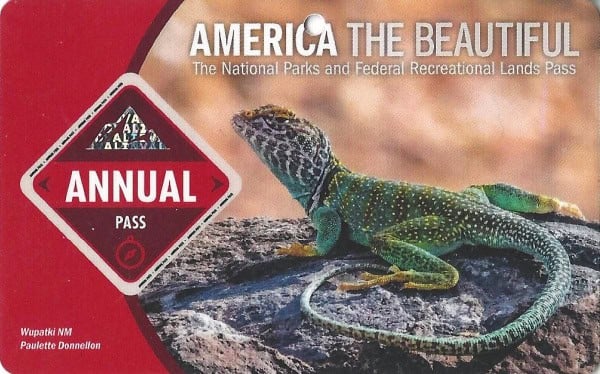
Buy your pass at this link, and REI will donate 10% of pass proceeds to the National Forest Foundation, National Park Foundation, and the U.S. Endowment for Forestry & Communities.
National Park Free Entrance Days -Mark your calendars with the free entrance days the National Park Service offers for US citizens and residents.
Additional Hawaii Volcanoes National Park information
Complete Guide to Hawaii Volcanoes National Park - This complete guide will help you plan a perfect trip to Hawaii Volcanoes National Park. Includes general park information, camping, lodging options, weather by season, and so much more!
Things to do in Hawaii Volcanoes National Park - include all the top activities to do while visiting Hawaii Volcanoes National Park!
National Park Camping
Season: Year-round
Campsites: 16
Accessibility: There are no Accessible sites
The campground is located off of the Hawaii Belt Road a few miles from the visitor center. There is a sign on the road reminding you where to turn.
Season: Year-Round
Campsites: 9
Accessibility: Three campgrounds are wheelchair accessible
Kulanaokuaiki Campground is located about 5 miles down the Hilina Pali Road
National Park sites to visit near Hawaii Volcanoes National Park
PU'UHONUA O HÖNAUNAU National Historical Park - Also known as the City of Refuge or Place of Refuge is a sacred site for Hawaiians. Visiting this park will give you tremendous insight and knowledge about the Hawaiian culture and way of life.
Kaloko Honokohau National Historical Park - preserves and shows the ingenuity of the native Hawaiians (kanaka maoli) used to survive in the hot and arid environment around Kona by the building of fishponds.
Pu`ukoholā Heiau National Historic Site- is an 86-acre park that protects one of the oldest structures in the National Park System. The Puukohola Heiau was built in 1790-91 by the Hawaiian leader Kamehameha I.
Check out all of the Hawaii National Parks along with Alaska National Parks, National Parks in Washington, Oregon National Parks, and National Parks in California
Make sure to follow Park Ranger John on Facebook, Instagram, Pinterest, and TikTok


Leave a Reply