
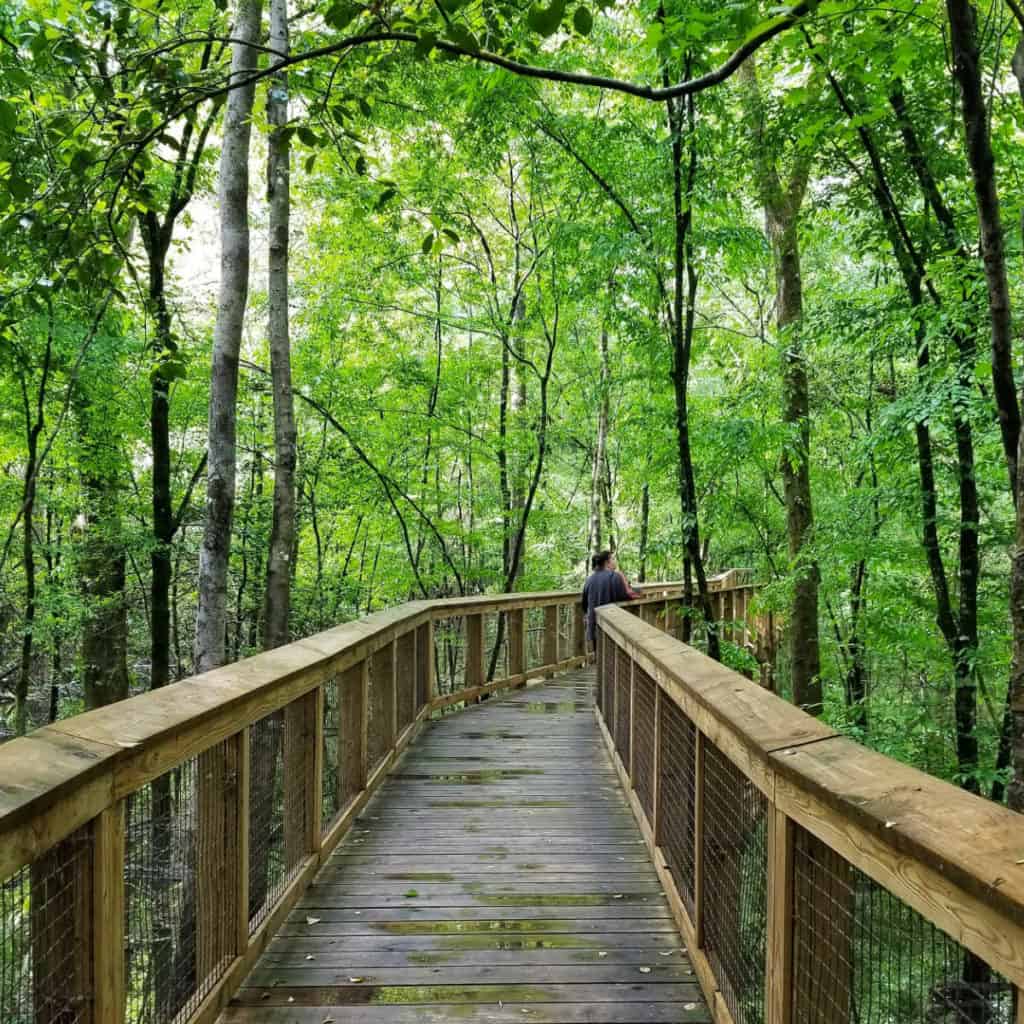
Congaree National Park is located near Columbia, South Carolina. What makes Congaree special is that the park protects the largest intact expanse of old-growth bottomland hardwood forest remaining in the southeastern United States.
TL;DR Don't have time to read the full article? Here are my top finds:
🏨Hotels and Vacation Rentals
📍Tours
🐻 Save time! Buy your National Park Pass before your trip
Congaree National Park
Not only does Congaree National Park protect the largest area of old-growth bottomland hardwood temperate forest, it also protects several other animal and plant species found in alluvial floodplains. It has some of the most beautiful and tallest trees in the Eastern part of the country.
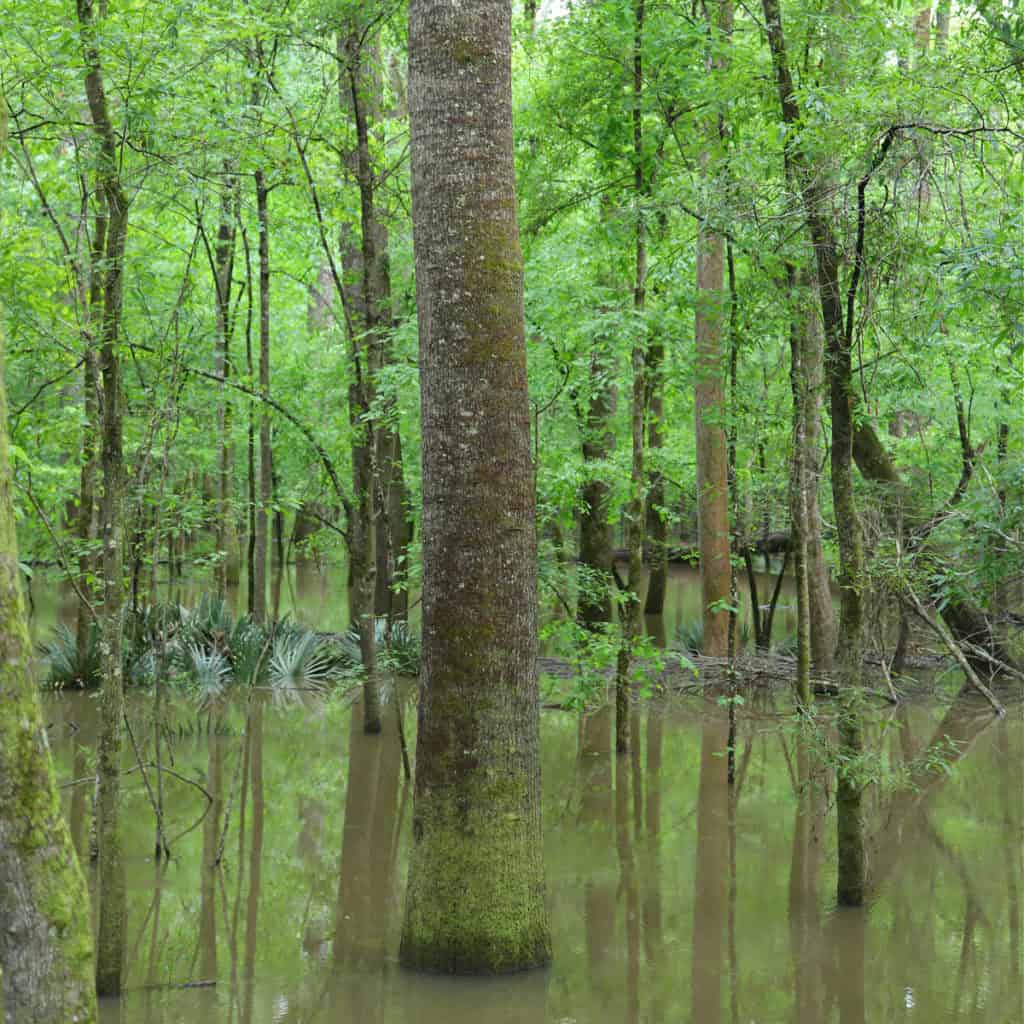
Congaree is not a swamp per se, it is known as being as one of the most important International Biosphere Reserve and National Natural Landmarks.
Congaree National Park is designated an old-growth forest and has one of the largest and majestic concentrations of champion trees.
Champion trees are trees that are found on the list of the National Register of Big Trees and refer to some of the largest trees of each variety recorded. There are 25 Champion Trees within the park that can boast being the largest for their species.
There are champion trees here from 15 different species some of them include a 157-foot sweetgum, a 133-foot swamp chestnut oak, a 127-foot common persimmon, a 167-foot loblolly pine, a 154-foot cherry bark oak, a 135-foot American elm, and a 131-foot overcup oak.
There are bald cypress trees with 25+ feet circumferences.
History of Congaree National Park: How Congaree National Park Was Saved From the Loggers
More than 52 million acres of floodplain forests were present in the Southeast United States in the late 1800s.
The trees began disappearing as they were harvested for lumber. In less than 50 years most of the bottomland forests were decimated by post Civil War loggers.
In 1969, The Sierra Club launched a campaign to save this area from exploitation by the private owners due to the high prices of wood. Due to this campaign, Congress declared the Congaree Swamp a National Monument on October 18, 1976.
Six years later the national monument became a Biosphere Reserve on June 30, 1983, and almost two-thirds were declared a protected wild area on October 24, 1988, in addition to being designated as an Important Bird and Biodiversity Area (IBA) by the American Bird Conservancy on July 26, 2001.
On November 10, 2003, Congress changed the designation of the monument site to Congaree National Park and expanded its boundaries by about 4,500 acres.
In addition to being a designated Wild Area, a Biosphere Reserve, an Important Bird Area and a National Natural Monument, Congaree National Park has camping sites and offers hiking, canoeing, primitive camping, interpretive walks, and canoe tours, kayaking and bird watching, and environmental education programs.
Nearly two-thirds of the park is designated as a wilderness area.
Congaree National Park Entrance Fee
Congaree National Park does not charge an entrance fee! If you plan on visiting numerous sites on a National Park trip, you may consider buying an America the Beautiful/National Park Pass before your trip.
Learn more about National Park Passes for parks that have an entrance fee.
$80.00 - For the America the Beautiful/National Park Pass. The pass covers entrance fees to all US National Park Sites and over 2,000 Federal Recreation Fee Sites for an entire year and covers everyone in the car for per-vehicle sites and up to 4 adults for per-person sites.
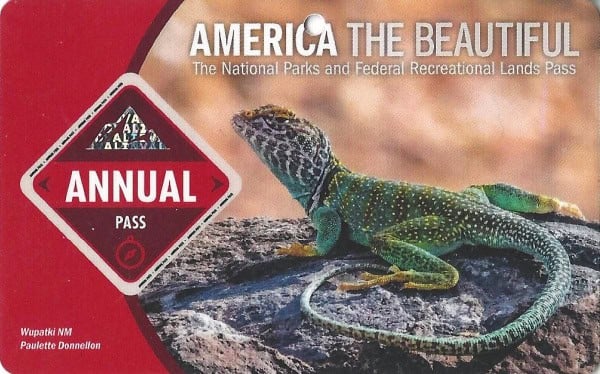
Buy your pass at this link, and REI will donate 10% of pass proceeds to the National Forest Foundation, National Park Foundation, and the U.S. Endowment for Forestry & Communities.
National Park Free Entrance Days -Mark your calendars with the free entrance days the National Park Service offers for US citizens and residents.
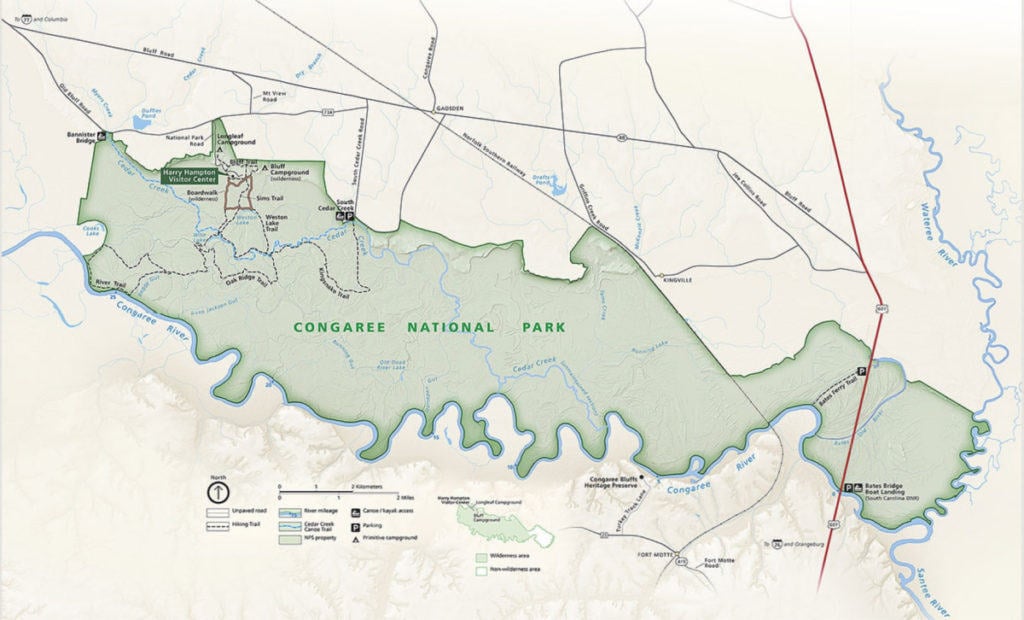
Congaree National Park Information
Time Zone - (EST) Eastern Standard Time
Size - Congaree National Park has 26,276-acres total and about 15,000 acres are designated as a wilderness area.
This includes the largest intact expanse of old-growth bottomland hardwood forest remaining in the southeastern United States.
Congaree is currently ranked at #58 out of 63 National Parks by Size. The only National Parks that are smaller than Congaree are Indiana Dunes, Virgin Islands, American Samoa, Hot Springs, and Gateway Arch NP.
Check out how the park compares to other National Parks by Size.
Date Established - On November 10, 2003, Congress changed the designation of the monument site to Congaree National Park.
Phone Number - (803)776-4396
Park Address - 100 National Park Road, Hopkins, SC 29061
Pets - Congaree National Park is a very dog-friendly park. Pets are allowed on all trails, including the boardwalk, as well as in the campgrounds.
Make sure to B.A.R.K.
B - Bag your pet's waste and dispose of it properly.
A- Always leash your pet, leashes may be no longer that six feet in length, under your control and not left unattended.
R- Respect Wildlife - keep you and your pet plenty of distance from park wildlife.
K- Know where you can go; pets are welcomed throughout Congaree National Park, except inside the Ranger Station.
Cell Service - Cell service can be hit and miss within the park.
Park Hours - The park is open 24 hours a day, year-round.
Wi-Fi Available - Public WiFi is available in the Harry Hampton Visitor Center and breezeway 24 hours a day.


Restaurants near Congaree National Park - There are no food services within the park. The closest town with food options is Gadsden, South Carolina approximately 10 minutes from the park.
Columbia, South Carolina, is just a half-hour away and has numerous excellent restaurant options, including Bourbon, Rambo's Fat Cat Biscuits, The Spotted Salamander, a few breweries, plus many more great options! Read my Columbia, SC, and Congaree NP Trip Report for a full list of restaurants and things to do in Columbia, South Carolina.
Gas - There are no gas stations in the park; however, there are several areas in Columbia, South Carolina, where people can get gas.
Drones - Drones are not permitted within National Park Sites.
Electric Vehicle Charging - There are no charging stations in Congaree National Park; however, Columbia, South Carolina, has over 250 charging stations! Click here for a full map of EV Charging Stations in Columbia, South Carolina.
Don't Forget to Pack
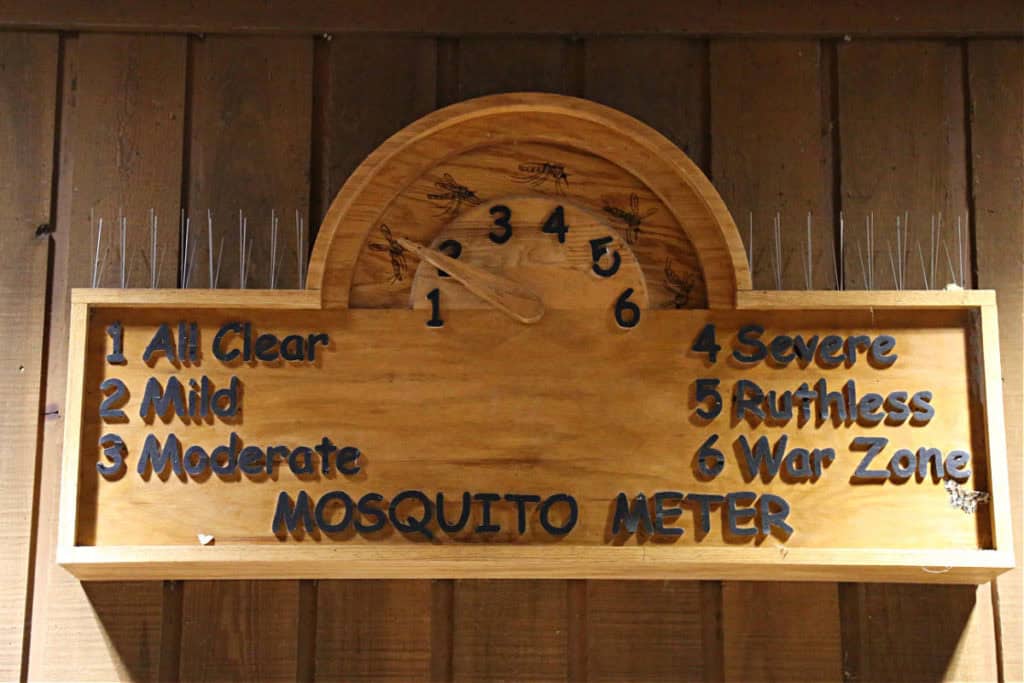
- Insect repellent is always a great idea outdoors, especially around any body of water.
We use Permethrin Spray on our clothes before our park trips. Please read my article on preventing biting insects while enjoying the outdoors.
- Sunscreen - I buy environmentally friendly sunscreen whenever possible because you inevitably pull it out at the beach.
- Bring your water bottleand plenty of water with you. Plastic water bottles are not sold in the park.
- Sunglasses - I always bring sunglasses with me. I personally love Goodr sunglasses because they are lightweight, durable, and have awesome National Park Designs from several National Parks like Joshua Tree, Yellowstone, Hawaii Volcanoes, Acadia, Denali, and more!
Click here to get your National Parks Edition of Goodr Sunglasses!
- Binoculars/Spotting Scope - These will help spot birds and wildlife and make them easier to identify. We tend to see waterfowl in the distance, and they are always just a bit too far to identify them without binoculars.
Congaree NP was featured in the 2009 Passport Stamp Set
Hiking at Congaree National Park
If you love hiking and nature walks then the Weston Lake Loop Trail (4.6 mi), Bluff Trail (0.7 mi), King Snake Trail (11.1 mi) and Oakridge Trail (7.5 mi) is exactly what you need!
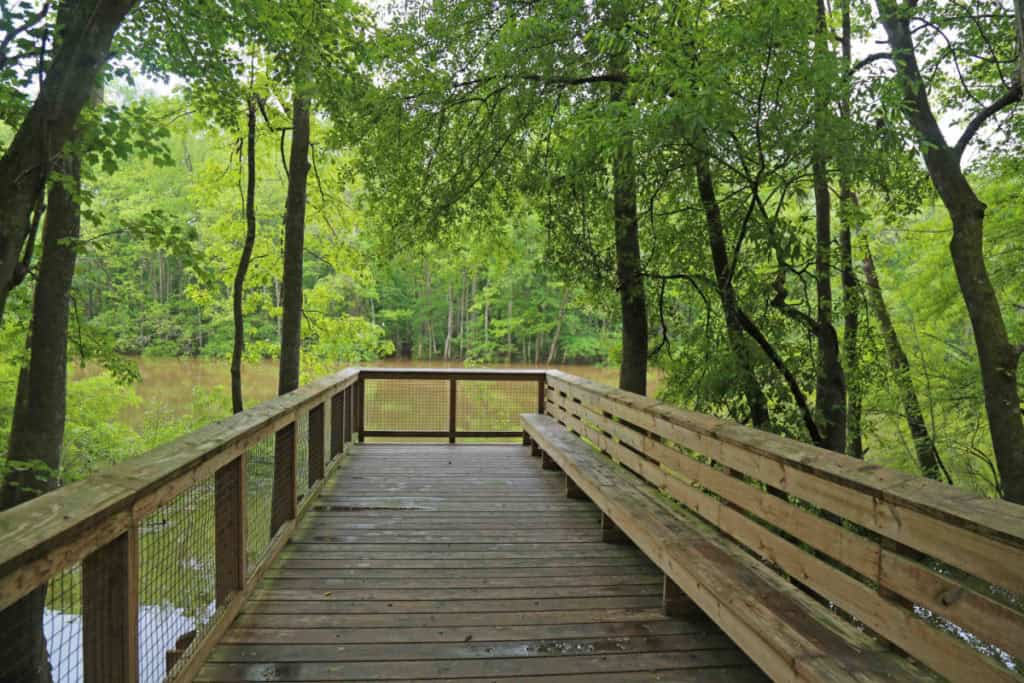
Most visitors choose to hike the Boardwalk Loop Trail, a 2.4-mile elevated walkway that goes through the swampy environment.
The park's unique ecosystem is also filled with extraordinary plant species.
Boardwalk Loop Trail
- Distance - 2.6 miles, easy
- ADA Accessible - The trail is Wheelchair accessible.
This is the most popular trail within the park. It is easily accessible from the park visitor center.
There are benches along the trail which we highly suggest enjoying. We were in awe of the birds and nature sounds we enjoyed along the trail.
Bluff Trail
- Distance - 1.8 miles, easy
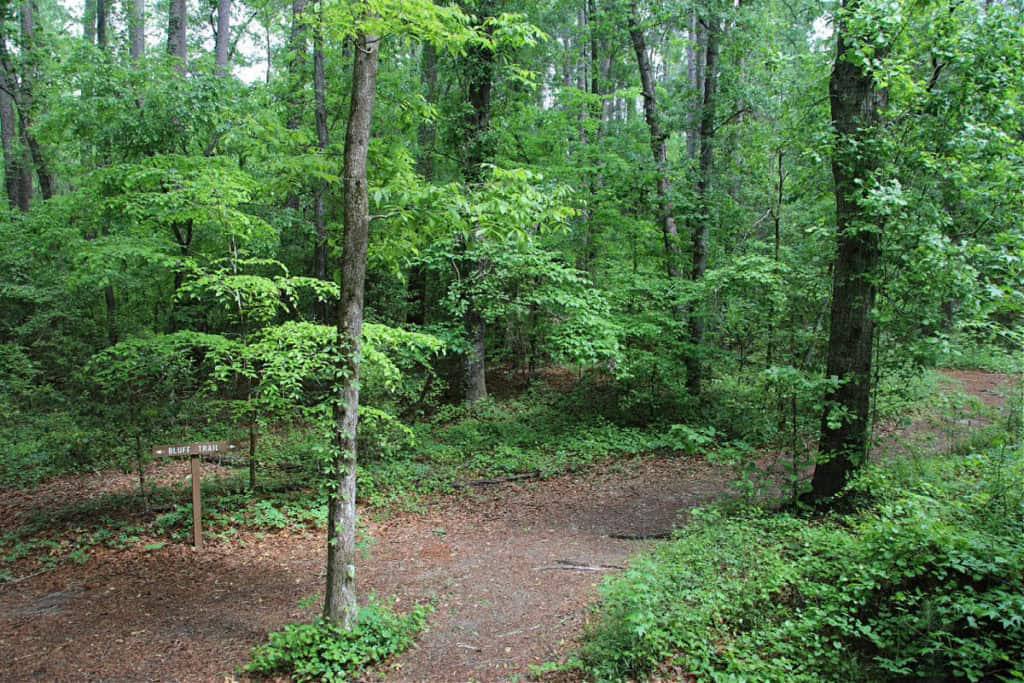
The Bluff Trail loops north of the visitor center and connects to the elevated boardwalk for a short distance.
Sims Trail
- Distance - 3.2 miles, easy
The Sims Trail follows an old gravel road and runs from the Bluff Trail to Cedar Creek.
Weston Lake Trail
- Distance - 4.5 miles, moderate
The Weston Lake Trail offers excellent views of Cedar Creek. Make sure to look for otters and wading birds.
Oakridge Trail
- Distance - 7.1 miles, difficult
This trail is great for wildlife viewing but is considered difficult to follow in areas.
River Trail
- Distance - 11.1 miles, difficult
This trail leads to the Congaree River. It can be difficult to follow in some areas.
Kingsnake Trail
- Distance - 5 miles from South Cedar Creek Canoe Landing, Moderate
The Kingsnake Trail is really popular with bird watchers. The trail includes diverse vegetation and is close to Cedar Creek.
Bates Ferry Trail
- Distance - 2.2 miles, easy
The Bates Ferry Trail starts from Route 601 in the eastern portion of the park. The trail follows a 1920s ferry road south to the Congaree River.
Longleaf Trail
- Distance - 1.3 miles (one way), Easy
This trail connects the Longleaf campground to the visitor center and boardwalk trails.
Fork Swamp Trail
- Distance - .6 miles, Moderate
This trail runs alongside the southern channel of Bates Old River.
Firefly Trail
- Distance - 1.8 miles
In late spring visitors can see a magical light show produced by synchronous fireflies along this trail.
Things to do at Congaree National Park
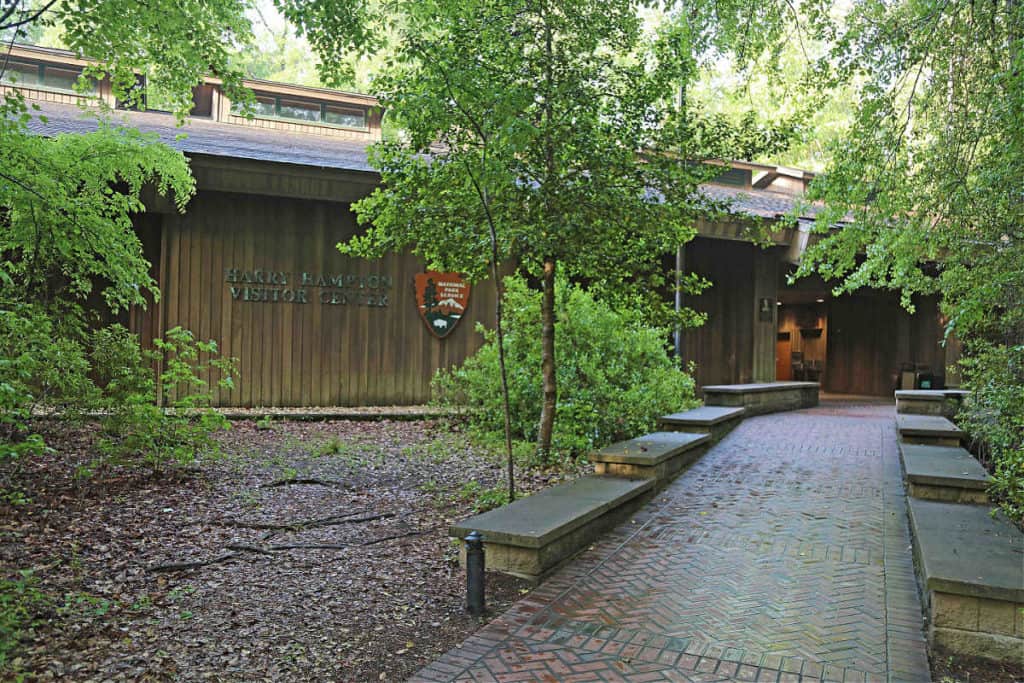
Visit the Harry Hampton Visitor Center
Here, you will also find presentations on the park's natural history and efforts made so far to protect the swamp.
Seeing Congaree National Park Flooded
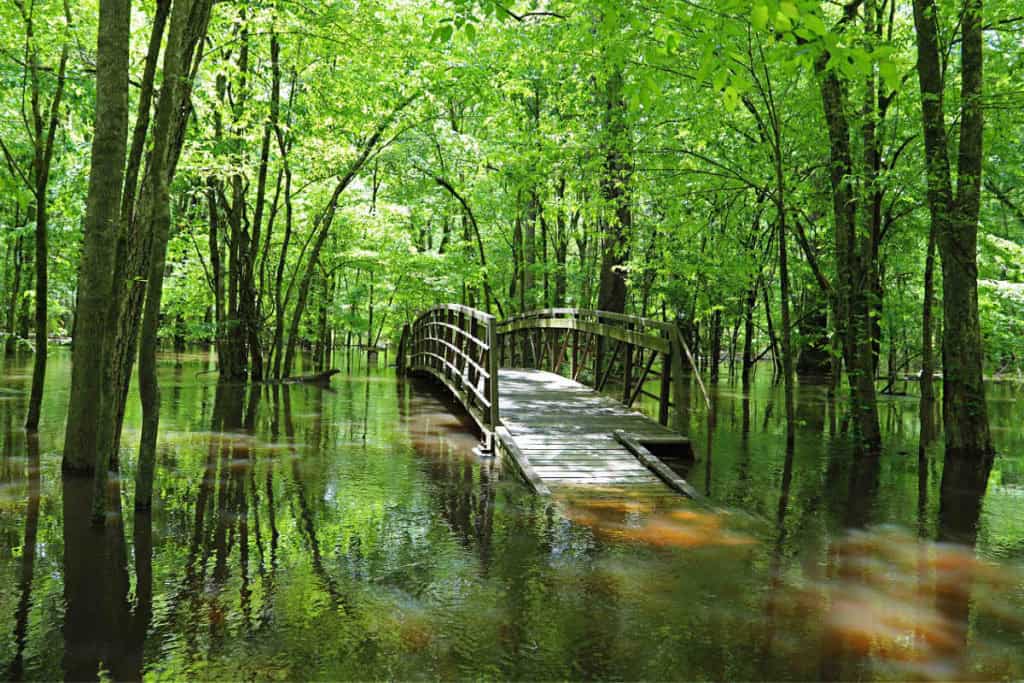
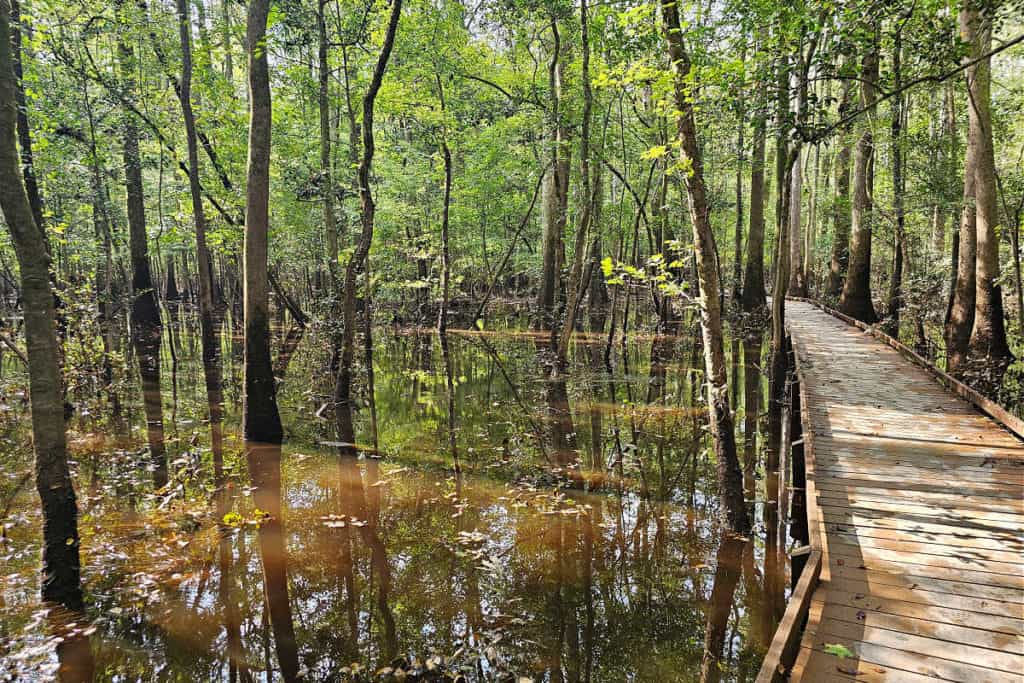
Seeing Congaree NP flooded is a unique way to see the park. The boardwalks are partially covered in water, which allows for a different view of the park.
Wildlife viewing
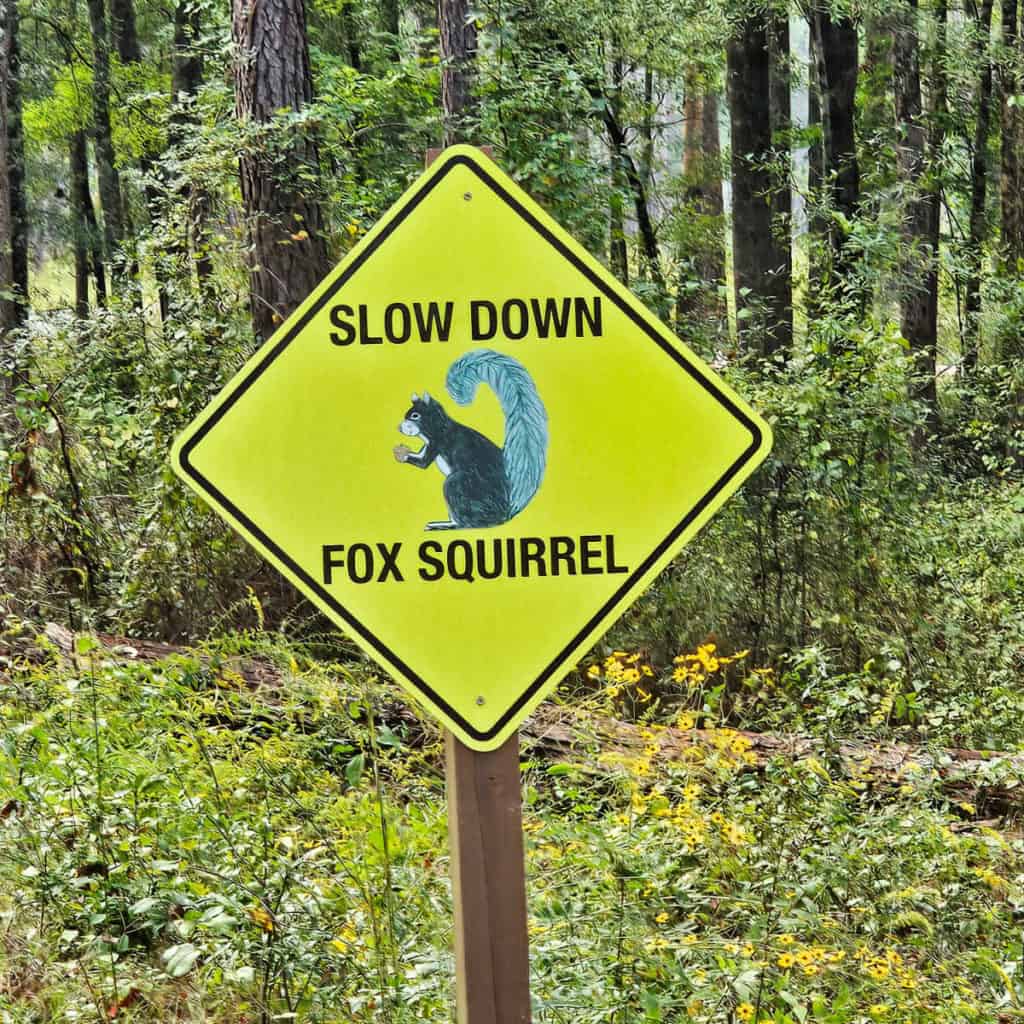
You can spot raccoons, white-tailed deer, and even bobcats along the way, as the park is home to a wide variety of wildlife. You may even see other wildlife species, including river otters, amphibians, reptiles, turtles, snakes, alligators, and many species of fish.
There have been almost 200 species identified in the park, including Wood Ducks, Wild Turkeys, and Barred Owls, so make sure to bring your binoculars.
Synchronous Fireflies: 2-Week Spring Spectacle (Lottery Required)
For approximately two short weeks each Spring, from around mid-May to mid-June, synchronous fireflies at Congaree display flashing lights at night to search for their mate.
This unique event is extremely popular with park visitors, and the park has had to implement a lottery to get an entrance ticket to prevent habitat destruction. During this time, park visitors can expect the park to close for day use around 4:30 PM to protect habitat areas and to prepare for the 145 guests who scored lottery tickets for the night's event.
Click here to apply for the lottery (When available)
Check out the Fireflies page for more info.
Park Ranger John Pro Tip
Bug spray/insect repellent can be your lifeline at Congaree, but make sure to only apply insect repellent before entering the park. This will help protect the firefly habitat. You may not see them, but synchronous fireflies are not migratory and are very localized.
Congaree National Park Tours
Congaree National Park Self Guided Audio Walking Tour
⭐️ Rating: 4.8 out of 5 Stars | ⏳ Tour Length: 4-5 hours | 🔊Check Rates and Availability
Step into one of America's last old-growth forests at your own pace with this GPS-enabled audio tour that brings Congaree's giant trees, hanging vines, and swamp ecosystem to life. Walk the shaded Boardwalk Loop Trail (2.4 miles) while learning about the park's history, wildlife, and the people who once lived and worked here, with stops at Weston Lake, Bluff Trail, and the Harry Hampton Visitor Center. The guide works offline and includes local tips on the best spots to listen for frogs, birds, and the flowing Congaree River, plus you'll have lifetime access to revisit anytime.
Guided Congaree National Park Kayak Tour
⭐️ Rating: 5 out of 5 Stars | ⏳ Tour Length: 2-3 hours | 🛶Check Rates and Availability
Paddle Cedar Creek through the largest intact old-growth bottomland hardwood forest in the Southeast on this 2-3 hour guided kayak adventure inside Congaree National Park. Your guide will lead you past towering bald cypress, tupelos, and sweet gums lining the creek banks, exploring waterways not accessible by land while sharing stories about this unique ecosystem. Perfect for all experience levels and going rain or shine, the tour includes your kayak, paddle, life jacket, and guide, so just show up ready to experience South Carolina's only national park from the water.
Getting to Congaree National Park
Congaree National Park is located in central South Carolina on the East Coast of the United States of America.
Major cities near Congaree NP
Estimated distance from major cities
- Columbia, South Carolina - 17 miles, 25 minutes
- Augusta, Georgia - 91 minutes, 1 hour 34 minutes
- Charleston, South Carolina - 104 miles, 1 hour 48 minutes
- Charlotte, North Carolina - 108 miles, 1 hour 40 minutes
- Savannah, Georgia - 147 miles, 2 hours 24 minutes
- Atlanta, Georgia - 230 miles, 3 hours 30 minutes
- Jacksonville, Florida - 278 miles, 4 hours 10 minutes
- Williamsburg, Virginia - 416 miles, 6 hours 5 minutes
- Nashville, Tennessee - 462 miles, 7 hours
- Washington DC - 483 miles, 7 hours, 15 minutes
- Louisville, Kentucky - 528 miles, 8 hours
National Parks near Congaree NP
Great Smoky Mountains National Park - 204 miles
New River Gorge National Park - 327 miles
Shenandoah National Park - 382 miles
Mammoth Cave National Park - 472 miles
Cuyahoga Valley National Park - 600 miles
Closest Airports
Columbia Metropolitan Airport, located in Columbia, South Carolina. It is approximately 30 minutes and 24 miles to the park. The airport code is CAE.
Charlotte Douglass International Airport, located in Charlotte, North Carolina. It is approximately one hour and forty-eight minutes and 111 miles to the park. The airport code is CLT.
Charleston International Airport in Charleston, South Carolina. It is approximately one hour and forty-eight minutes and 102 miles to the park. The airport code is CHS.
Driving Directions
Charleston, South Carolina
Take Interstate 26, Exit 145B. Take U.S. Highway 601 North to SC 48 (Bluff Road). Follow SC 48 (Bluff Road) West. Turn left on South Cedar Creek Road then right on Old Bluff Road to the park entrance.
Charleston SC to Congaree National Park is 103 miles, about 1 hour and 55 minutes
Charlotte, North Carolina
Take Interstate 77 South towards Columbia for approximately 95 miles to Exit 5, Bluff Road. Follow directions below from Interstate 77, Exit 5. (Approximate travel time: 2 hours)
From Interstate 77, Exit 5
At Exit 5 turn onto SC Hwy 48 East/Bluff Road. Drive approximately 8 miles and then take a slight right onto Old Bluff Road. Follow Old Bluff Road for 4.5 miles to the park entrance sign, which will be on the right.
Proceed one mile to the Harry Hampton Visitor Center. Parking lots will be on the right.
Best time to visit Congaree National Park
The best time of year to visit Congaree is Fall and Spring.
The temperature is normally pretty comfortable during fall and spring, the mosquitoes are manageable, and most of the park is accessible.
Congaree National Park Weather and Seasons
The park has a humid subtropical climate which includes mild winters and wet humid warm summers.
Spring
Spring is the perfect time to visit the park. The weather is generally warm with highs in the mid to upper 70s.
Rainfall averages around 3 inches per month in the spring. Mosquitoes are not normally an issue.
Summer
June through August is the hottest time of the year in the park. The weather can reach the upper 90s and may go over 100 degrees.
Humidity is HIGH and makes the ambient temperature feel a lot hotter than it may say on the weather apps.
Thunderstorms are common during the summer along with the park receiving the highest amount of monthly rainfall. Summer rainfall averages around 4.5 inches a month.
Autumn/Fall
September through November the weather cools down to low 70s with low humidity. Fall colors normally peak between the end of October and early November.
Average rainfall is around 3 inches a month. The water levels on Cedar Creek are ideal for a paddling trip in the Fall.
Winter
November through February the temperature in the park is mild averaging around the mid 50s. Temperatures at night can drop to below freezing.
Winter is when flooding is most frequently experienced.
Lodging options near Congaree National Park
There are no National Park Lodges, cabins, or glamping tents available inside Congaree National Park. Camping is also extremely limited, but there are plenty of great lodging options in Columbia, South Carolina (approximately 15-30 minutes away).
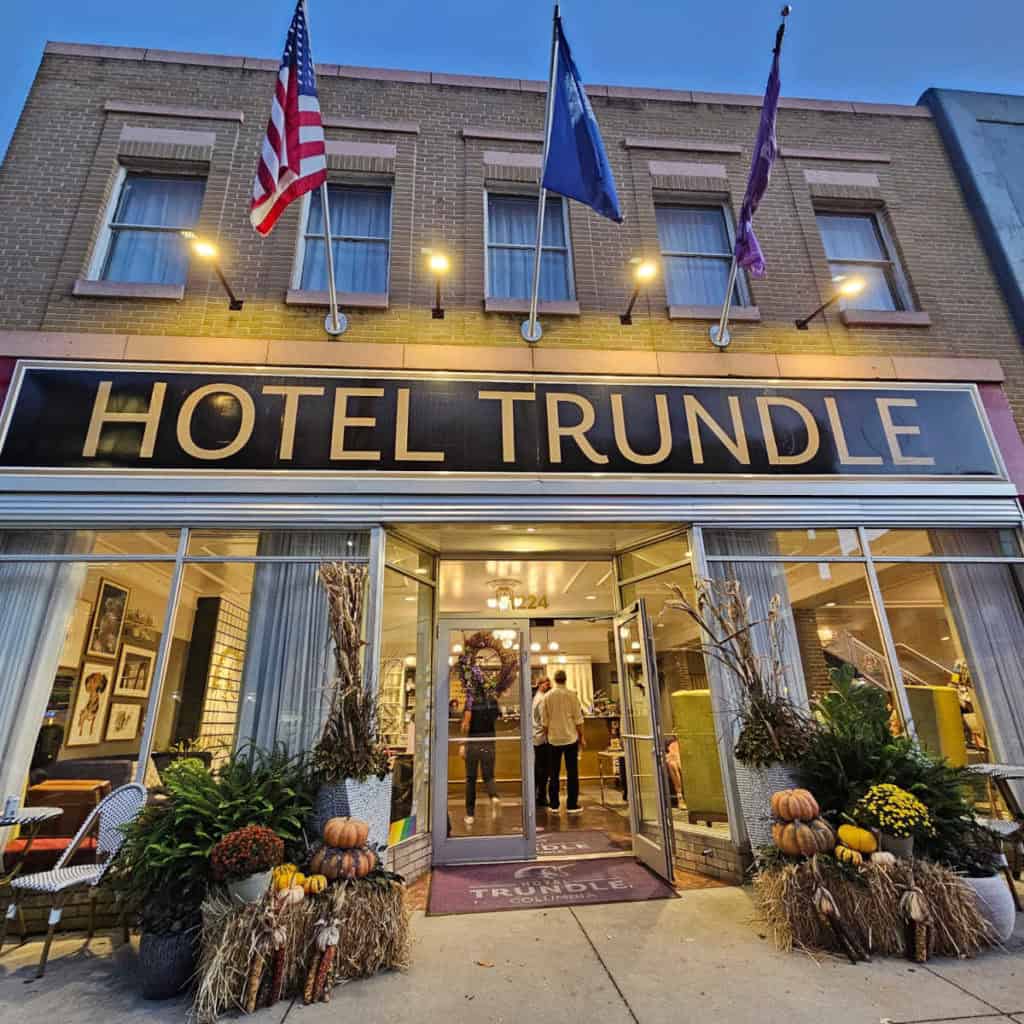
⭐️ 4.8 of 5 Stars - Hotel Trundle - Click here for Rates and Availability.
I stayed at Hotel Trundle and loved it! Hotel Trundle brings together three historic downtown Columbia buildings (dating from 1914 to 1940) into one quirky boutique hotel that celebrates local artisans and Southern hospitality on Main Street. Each individually decorated room features premium pillowtop bedding, 55-inch flat-screen TVs, mini fridges, microwaves, and private decks or patios, creating a comfortable home base just 20 minutes from Congaree National Park. After paddling Cedar Creek or hiking the boardwalk trails, return to enjoy the complimentary continental breakfast, on-site bar, fitness center, and the helpful staff who consistently earn top marks from guests for their warm welcomes and attention to detail.
⭐️ 4.2 of 5 Stars - Marriott Columbia - Click here for Rates and Availability.
Located in the heart of downtown Columbia just minutes from the University of South Carolina, this 300-room hotel puts you close to Riverbanks Zoo, Williams Brice Stadium, and Congaree National Park (20 minutes away). Each spacious room features plush bedding, a 50-inch Smart TV with Netflix, workstation, and separate sitting area perfect for relaxing after a day exploring the park's boardwalks or paddling Cedar Creek. The hotel offers an indoor pool, fitness center, on-site Southern cuisine at Midlands' restaurant, plus helpful multilingual staff who consistently earn top marks from guests for their service and clean, comfortable accommodations.
⭐️ 4.9 of 5 Stars - The Lantern Columbia - Click here for Rates and Availability.
This boutique hotel sits in a historic Columbia landmark at the heart of the Vista district, just minutes from the University of South Carolina and 20 minutes from Congaree National Park. All 59 rooms feature contemporary design with premium bedding, 55-inch Smart TVs with Netflix and Hulu, mini fridges, and calming tones that create the perfect retreat after exploring the national park's old-growth forests. The property includes Ladder 13, a Mediterranean restaurant and bar set in the original firehouse framework, plus the hotel proudly employs and trains individuals with disabilities, delivering exceptional service while making a meaningful community impact.
Click this link or the map below for additional hotels and rental homes in Columbia, South
https://expedia.stay22.com/tammileetips/6rllJHqpS6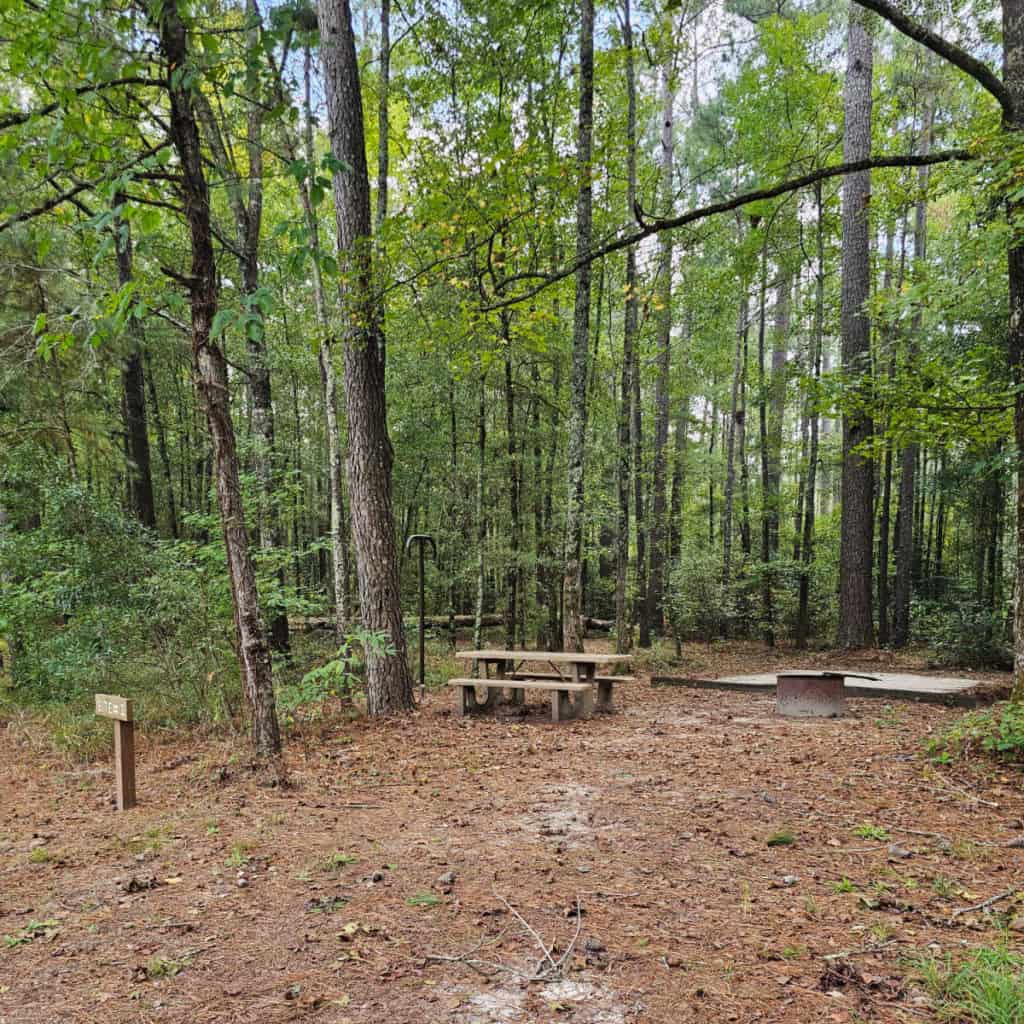
Congaree National Park Camping
Congaree National Park tent camping includes two small primitive front-country campgrounds, Cottonwood Campground and Bluff Campground, and backcountry camping with a permit.
What makes camping at Congaree special is that the park protects the largest intact expanse of old-growth bottomland hardwood forest remaining in the southeastern United States. The campgrounds provide easy access to the park, including almost a dozen hiking trails and the Harry Hampton Visitor Center.
All visitors planning to camp at Longleaf or Bluff Campgrounds must make reservations via Recreation.gov or by calling 1-877-444-6777.
Click here to learn more about camping in Congaree National Park.
The park has no RV parking sites, but Sesquicentennial State Park has RV sites with hookups for their campers.
National Parks near Congaree National Park
- Ninety-Six National Historic Site - 93 miles
- Kings Mountain National Military Park - 114 miles
- Reconstruction Era National Historical Park - 123 miles
- Cowpens National Battlefield - 135 miles
- Fort Pulaski National Monument - 161 miles
- Ocmulgee National Monument - 215 miles
- Andersonville National Historic Site - 280 miles
- Jimmy Carter National Historic Site - 306 miles
Check out all of the South Carolina National Parks and neighboring National Parks in Georgia, North Carolina National Parks, and Tennessee National Parks.
Check out all of the National Parks in the Southeast.
Make sure to follow Park Ranger John on Facebook, Instagram, Pinterest, and TikTok